Category Archives: Feature

Reviews, critiques and essays on selected topics

Nobuyoshi Araki: Tokyo Aruki (Tokyo Walks)

Text and images by John Sypal for Japan Exposures

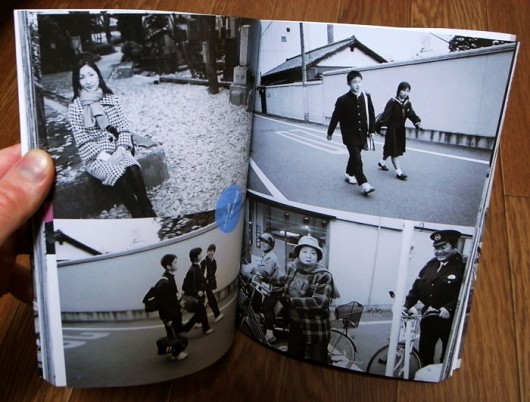
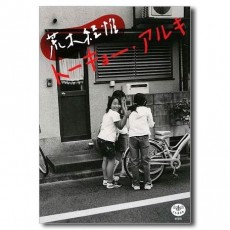
Nobuyoshi Araki: Tokyo Aruki (Tokyo Walks)The other night I picked up Araki’s latest book, Tokyo Aruki. It comes in at a modest 160 pages printed at the extremely portable A5 size. Initially I was taken in by the reasonable asking price, but after a couple go-throughs it is plain to see that portability was a major factor in this book’s construction.

Each section is divided between various locations throughout Tokyo, taken over a full year between July 2007 to July 2008. Similar to Aget’s Paris, Tokyo is Araki’s town.

It is worth stepping back for a moment to reiterate that “Tokyo” as you might think is not technically a city in the way that Omaha is considered to be. That said, he kept to a handful of the 23 wards for the photographs which ended up in this book. To be more casually precise (!), the photographic sections have been separated into areas often determined by the name of the local train station.

Nobuyoshi Araki: Tokyo Aruki (Tokyo Walks)

Interspersed through the pages are brief essays on thoughts of his personal meanings for each area. Some of the sections feature the appearance of young women who have flocked (his words) to him to be photographed. I say that jokingly, but I have with my own eyes seen a young woman break down into tears simply upon seeing the man step out of a room. So “flock” it is.

Often his writing goes further into technique and thoughts on the human condition in Tokyo which in Japanese can sound sweet, but putting it into English they are a little corny. For good measure it seems that the editor felt it best to highlight some of the cornier statements in blue or pink and slap them down on top of a perfectly fine photograph. There are unexpected visual treats here, but one has to look a little harder than usual to find them.

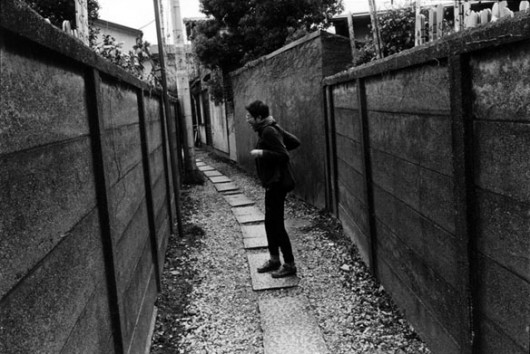
For those who only know the more internationally marketable and nude/bondage side of Araki’s work, the fact that he is a street photographer on par with — and often surpassing — the “greats” might come as a surprise. Due to limitations in printing quality and text placement this book isn’t the greatest vehicle to find this out, but at the price it is a good beginning chance to explore this recent softer side of his work.

Nobuyoshi Araki: Tokyo Aruki (Tokyo Walks)

If you are at all ever out with a camera in Tokyo you’ll no doubt recognize the locations of a good half of the pictures, or in some cases, have already photographed there yourself.

Nobuyoshi Araki: Tokyo Aruki (Tokyo Walks)

Earlier I mentioned that portability is an essential aspect to this book’s creation. It wasn’t until looking at the last three pages when the realization that Tokyo Aruki is in part, a Tokyo walk-a-bout type travel companion. It’s “Araki does Tokyo” in a way that is different from his other previous (and often more literal) experiences.

Nobuyoshi Araki: Tokyo Aruki (Tokyo Walks)

Since it is indeed a travel guide, each section of the book has it’s very own precise map, complete with Araki’s very route highlighted for those who might want to hit up the same spots. If the recent press is of any indication, Tokyo Camera Walks seemed to have exploded in popularity over the past few years and I’m assuming that due to it’s extremely approachable content matter, this book has several print runs ahead of it.

And for those who might be interested in the cameras which he used, a few pages before the maps are devoted to an informative essay about his camera choice (two Mamiya 7II) and (naturally) pictures of Araki on the street working.

Nobuyoshi Araki: Tokyo Aruki (Tokyo Walks)


John Sypal
John Sypal

John Sypal, born and raised in Nebraska, USA, currently living in Matsudo city (Chiba Pref.).

John has been exhibiting his photographs widely in the US and in Japan. His photographs are frequently featured in Japanese photo magazines.

He is currently a member of Machikata Sampo Shashin Doumei (Walking Photographers Alliance).

John also enjoys meeting people and photographs their cameras for tokyo camera style.


Tokyo Aruki can be purchased in the Japan Exposures Book Store.

Interview with Hiroyo Kaneko

I first came across the work of Hiroyo Kaneko earlier this year when I received my copy of Lay Flat, the new photography magazine started by Shane Lavalette. Included with the journal were 20 or so photographs by various artists, each printed individually on card stock. When I came to Kaneko’s image from her Picnic series (reproduced here), I was given a little start — here was a scene that was unmistakably of Japan, and yet somehow not of it at the same time. I was intrigued.

It was only a couple of weeks later that I read a blog post somewhere noting that Kaneko had won the prestigious Santa Fe Prize for Photography for her series Sentimental Education. It seemed almost too much of a coincidence. (So too did learning the fact that Kaneko had attended the school I had spent four years of my own educational life at — San Francisco Art Institute.) I wanted to know more about this person who was exploring such threads of the Japanese cultural and societal fabric as hot spring baths and cherry blossom viewing parties while removed in part from the day to day-ness of life in Japan.

This interview was conducted over email in May. Please also see our Cover Photo featuring Kaneko.

Japan Exposures: I would like to know how you first became interested in photography. You majored in French Literature at Meiji Gakuin University. How did you go from that to attending San Francisco Art Institute and earning an Masters of Fine Arts in Photography there?

Hiroyo Kaneko: When I was in Meiji Gakuin, I took some classes about the visual arts and film. That was because the period that I was studying within French Literature was early to mid 20th century, a time when all the cultural movements interacted each other. I was interested in the relationship between writers, visual artists and filmmakers, such as Andre Breton, Man Ray, Marcel Duchamp and Luis Bunuel.

I was also into French New Wave films, especially Jean-Luc Godard and François Truffaut as well as Japanese film makers, like Yasujiro Ozu, Mikio Naruse and Seijun Suzuki. All those visual experiences got me involved in a filmmaking circle and I made a few 8mm films with my classmates. However, after we graduated it became difficult to get together to continue the activity, and then I gradually shifted to photography which I could do on my own.

After working in an advertising office for a couple of years, I went to London to study English and photography. I attended a small art college and got a diploma in photography, then went back to Tokyo and started working as an assistant photographer, and eventually as a freelance photographer and writer for some culture and photography magazines.  At the same time, I kept working on my own photo projects. This was from mid-1990s to the turn of the 21st century.

The more I had chance to have exhibitions, the more I became interested in focusing on art photography for myself. Then I decided to go to the United States to pursue photography further. San Francisco Art Institute was one of the schools that I applied to, I was interested in it because a few interesting photographers had gone there, such as Lewis Baltz, Annie Leibovitz, Jim Goldberg, Catherine Opie, etc.

I got interested in seeing how our ordinary daily experiences nurture the ways we communicate with each other.”

JE: You still live in San Francisco. How long have you now lived in the U.S.?

HK: I have lived here since 2002. San Francisco is a comfortable place to live. Compared to Tokyo, New York, or other bigger cities, it’s slow and relaxed. But at the same time, the art scene is quite active. Although there are not many commercial galleries — actually I guess it’s almost the same size as Tokyo where the contemporary art market is really small – there are some alternative and community art galleries and organizations over the city which offer various events all the time. If you go over to the East Bay, you can see a different type of art scene as well. I should also mention that the Pacific Film Archive in the UC Berkeley and a few other independent movie theaters let me stay here as they always show a variety of film programs.

Hiroyo Kaneko - from "fountains" series
Hiroyo Kaneko – from “fountains” series
JE: How often — and for how long each time — do you return to Japan?

HK: I go back to Japan about twice a year since graduating, and stay for a couple of weeks to a month each time.

JE: Although based in the U.S., your projects themselves seem to be based very much around Japan and subjects close to Japan, such as cherry blossoms or hot springs. Do you think living outside of Japan lets you look at these familiar aspects of Japan in a different way?

HK: Although I said before that San Francisco is a comfortable place to live, for the first couple of years after I moved here, I experienced severe difficulty communicating with others. This doesn’t mean that the people in the US are more severe than people in Japan. I guess that any community in contemporary society should be same more or less, even within families. But for me, it was more obvious here because I was a stranger, had a language barrier, and faced cultural differences, etc.

However I also became more grateful and found it precious when I saw mutual respect or understanding. For those reasons, I got interested in seeing how our ordinary daily experiences (rituals) nurture the ways we communicate with each other and how we interact emotionally with each other. Rather than showing the tough side, I wanted to show something more neutral, basic or more positive and warmer aspects of it.

Then I came up with the idea of photographing people in bathhouses in Japan which seemed to me an ideal setting for my purpose. The cherry blossom pictures stem from a similar idea. I photographed them in Hirosaki in Aomori Prefecture, where I was born and spent my childhood. I was interested in reviewing and recreating my early experience which, I guess, helped to create my emotional makeup.

JE: In one of your artist statements [The Three Cornered World, 2006 — Ed.] you talk about moving around a lot due to your father’s work, and seeing yourself as a stranger. Can you talk more about how this idea of being a stranger manifests itself in your photography?

HK: As I wrote on that statement, the idea came from a novel by Natsume Soseki, who I like a lot. In his novel “The Three Cornered World”, he wrote:

Objectively you may feel that the love of a man for his wife or his parents is beautiful, and that loyalty and patriotism are fine things. When, however, you yourself are actually involved with them, the violent flurry of pros and cons, advantages and disadvantages, will blind you to all beauty and splendor, and the poetry will be completely lost to you.

In order to appreciate the poetry, you must put yourself in the position of an onlooker, who being able to stand well back, can really see what is happening. It is only from this position that a play or novel can be enjoyed, for here you are free from personal interests. You are only a poet while you are watching or reading, and are not actually involved.

(From a translation by Alan Turney; original Japanese text below.)

He talked about how important it was to see things as an onlooker for dealing with “love”, “faith”, “pain”, etc., being free from your own interest. In this novel, he repeated the phrase “standing as the third person” as well as “being detached” (he distinguished the meaning of these words from “inhuman”), telling how to sublimate emotional issues into art. And I totally agreed with his idea.

As people know, many of his novels actually deal with the emotional relationship between friends, couples, lovers and families. Sometimes, they are very touching and painful but at the same time they always keep some kind of dryness or a objective point of view, I think that this ambivalence or two sidedness is what I care about his work and I would like to apply for my work as well.

Hiroyo Kaneko - from "Sentimental Education" series
Hiroyo Kaneko – from “Sentimental Education” series
JE: I’m sure many people ask you this question, but how hard was it to get your family to agree to be photographed for the bath house series. You could of course have photographed other people at hot springs, but you chose your family. Why?

HK: At first, it wasn’t so hard. I just explained to them how I wanted to photograph in the bath house and they just agreed. I guess it was because they liked going out to hot springs to begin with and they wouldn’t have taken this photo session so seriously. But later, especially my mother became more hesitant to be a naked subject. So I had to make more of an effort to convince her. But they are basically pretty open minded and very helpful in general. I really appreciate their collaboration. Besides, the fact that I live abroad and show the work only in the US makes them less shy.

Initially, I didn’t particularly intend to make the portraits of my family but only to use them as models because I didn’t think that strangers would allow me to photograph them naked. Besides, I needed to demand of them some kind of posing as 1) I used a 4×5 camera and 2) I didn’t want this work to look like a documentary. So asking my family seemed to me the only choice for the situation. However, since then, I started to include their images in my other series also. I think that the more I photograph them, the more I am able to gain an objective and artistic view of them. So it has become less of an obstacle to deal with my family in my work.

JE: Could you tell us about some of the people (photographers or otherwise) that have been important to you, that inspire you?

HK: I am much more influenced by painting than by photography, I suppose. Especially the paintings by French impressionists like Manet and Cezanne (also Renoir and Bonnard too) teach me how I should deal with the natural light and color that are reflected from the subjects. For the way of seeing the relationship between people and family, I also learn a lot from movies by directors such as Mikiko Naruse, Yasujiro Ozu, Howard Hawks, Ingmar Bergman, Manoel de Oliveira, as well as others.

As for photographers, I admire these people: Eugene Atget, Lee Friedlander, Diane Arbus, Stephen Shore, Joel Meyerowitz, Jean-Marc Bustamante, Thomas Struth, Kineo Kuwahara, and Ihei Kimura.


Original Japanese of Soseki quote:

『恋はうつくしかろ、孝もうつくしかろ、忠君愛国も結構だろう。然し自身がその局に当たれば利害の旋風に巻き込まれて、うつくしき事にも、結構な事にも、目が眩んでしまう。従ってどこに詩があるか自身には解しかねる。

これがわかる為には、わかるだけの余裕のある第三者の地位に立たねばならぬ。三者の地位に立てばこそ芝居は観て面白い。小説も見て面白い。芝居を見て面白い人も、小説を読んで面白い人も、自己の利害は棚へ上げている。
見たり読んだりする間だけは詩人である。』

Fujifilm GF670 Professional goes Monsoon

Text and images by Michael G Dougan for Japan Exposures

Let me start by saying that I like folding cameras. In fact, I like them so much that between the 59 cameras I own, there are quite a few folders. When I got curious about film photography one of the first serious cameras I bought was an Agfa Super Isolette, then a Balda and a Certo Six and to round it off a Zeiss Super Ikonta. There is just something about these old mechanical cameras that I love.

So, when Fujifilm/Cosina Voigtländer announced the Bessa 667/GF670 Professional I wanted one badly. I’ve long preferred the square format but have recently been looking for a camera with a different aspect ratio and this camera satisfied my love of all things square while offering an alternative by being able to switch to 6×7 when desired.


We have the Fujifilm GF670 in black in stock for immediate shipping in the Japan Exposures Shop. Limited to 5000 cameras, BLACK Fujifilm version only available in Japan and equipped with the Fuji EBC (Electron Beam Coated) Fujinon lens.


Fujifilm GF670 Professional next to a Rolleiflex and Leica M6
The long wait was agonizing, having first contacted Dirk about the camera back in February to have to wait, suffering multiple delays, until May to finally get my hands on it. I can say though I’m not disappointed at all with the camera and the wait was well worth it.

As advertised the camera weighs in at 1kg but in operation it feels quite a lot less. Though when the camera is folded up it certainly feels like a lump, just not a 1kg lump. Once the lens has been extended the impression is of a very light camera.

In operation I immediately felt very comfortable with this camera, to me it feels very like a Leica to use, the focus is smooth and the aperture ring is easily and quickly adjusted. The built in light meter also takes the guesswork out of the exposures as with the old folders.

Since acquiring the camera I’ve shot it exclusively in 6 by 7 format and I like the opportunities it gives for framing over a square format. The shutter is extremely quiet, quiet enough to use in covertly but carrying a camera like this does attract a lot of inquisitive looks and questions from people.

Vulcanizing
Vulcanizing {click to enlarge}
Fujifilm GF670 Professional goes Monsoon
Love-Kim Verlie {click to enlarge}
The body on the right hand side has a very grippy rubber coating and grip on the front and back of the body. The left hand side is coated with the same rubber on the front of the body only but as I tend to cradle the underside of the body and lens standard with my left hand the grip is only of use for opening the camera. This way my thumb is in the perfect position to operate the focus and aperture rings. Focus and selection of aperture are achieved extremely quickly, this is a big plus for me as I try to quickly capture people before they have time to pose for the camera. The viewfinder is excellent, very bright with a nice contrasty rangefinder patch that allows you to achieve focus quickly.

I’m also extremely pleased with the camera’s image quality. I find it hard to say what it is but the images from the camera have a certain signature from the 80mm Fujinon EBC lens but maybe people more familiar with other Fuji lenses might say that is the signature of such lenses. It’s sharp, contrasty and the fuzzy bits just melt into the background beautifully.

You can see some samples of the type of photos I enjoy taking, which is out on the streets. I am living in the Philippines and it’s currently the monsoon season, which means it’s stinking hot and raining a lot! I was walking for less than an hour in the afternoon sun and the camera never felt heavy or a pain to carry. Here under these tropical conditions even a Leica can become irritating as you soon fatigue in the sun. The camera got extremely hot in the one hour I was out but the focus still had the same feeling of operation. With some my cameras they get a bit sloppy when they overheat, but this GF670 camera has been super smooth all the time, quick and easy to nail the focus, and the viewfinder’s clarity is excellent!

With the GF670 in my hands and several rolls of Neopan 120 in my pocket, it’s a perfect setup for me.

Fujifilm GF670 Professional goes Monsoon
Life in a plastic chair {click to enlarge}
Fujifilm GF670 Professional goes Monsoon
Break Time {click to enlarge}
Update 28 June 2009: More images below

Fujifilm GF670 Professional goes Monsoon
Bigasan {click to enlarge}
Fujifilm GF670 Professional goes Monsoon
Dried fish {click to enlarge}
Fujifilm GF670 Professional goes Monsoon
Friends forever {click to enlarge}
Fujifilm GF670 Professional goes Monsoon
In the street {click to enlarge}
Fujifilm GF670 Professional goes Monsoon
Mega Buko Juice at the Hard Rock Café {click to enlarge}
Fujifilm GF670 Professional goes Monsoon
Tommy {click to enlarge}
Fujifilm GF670 Professional goes Monsoon
Videoke for rent {click to enlarge}
Fujifilm GF670 Professional goes Monsoon
Four Women and a Boy {click to enlarge}
All black and white images were shot on Fujifilm Neopan 400 Presto, developed in paRodinal 1+50 for 11mins at 20 degrees C. Location: San Miguel, Bulacan, The Philippines


Fujifilm GF670 Professional goes MonsoonMichael Dougan is a 40 years old Scotsman who has been living in the Philippines for over 6 years. He is married to a beautiful Filipina and father to a son. He is currently working on the scientific drillship Chikyu in Japan, but has been in the offshore oil and gas drilling industry for 20 years. He is heavily involved as one of the organizers of Rangefinder Filipinas, keeping the passion for film photography burning in the Philippines.


We have the Fujifilm GF670 in black in stock for immediate shipping in the Japan Exposures Shop. Limited to 5000 cameras, BLACK Fujifilm version only available in Japan and equipped with the Fuji EBC (Electron Beam Coated) Fujinon lens.

Interview with Masahiro Kodaira

Masahiro Kodaira was born in 1972, and graduated from Tokyo Zokei University in 1997. Kodaira has been pursuing photography since 1994, with several solo and group exhibitions to his name. In addition to his own work, Kodaira has recently been involved in making new prints of the late, renowned avant-garde photographer Kiyoji Otsuji.

In the following interview, conducted earlier this year, Kodaira discusses with Japan Exposures his two major series to date, “Dr. Lorentz’s Butterfly” and “Onbashira”, how he came to photography, and his relationship with Otsuji, a major influence on a number of Japanese photographers. In addition to the photographs represented here, you can also view an extended gallery of Kodaira’s work.

Interview by Yu Hidaka for Japan Exposures.

Japan Exposures: First of all, as a way of introducing you to our readers, I would like to ask you about your solo exhibition entitled “Dr. Lorentz’s Butterfly”, which was held at the AiDEM PHOTO GALLERY SIRius in Tokyo in 2002. For the show, you brought together work done over many years, didn’t you?

Masahiro Kodaira: Yes, “Dr. Lorentz’s Butterfly” was a major outgrowth of many years of work. I had some experience to have my work exhibited before, but this was the first exhibition where I had a clear idea of what I wanted my photography to say. I was looking for the place to show my work that didn’t already have a fixed style or image attached to it. That is to say, not galleries run by camera companies, not small underground types of spaces, and so on. Instead I was looking for a gallery that was open to all genres. Then, I came across an opportunity to try for an open call that was issued by SIRius, and I passed the review.

JE: SIRius has a quite large gallery space compared to other places in Tokyo. How many photographs did you exhibit there?

MK: I showed 30 photographs there. Although usually solo exhibitions held there feature about 45 works, I chose 30 images because I thought the relationship between the works and the white space of the gallery walls important to creating a kind of tension. But after the show, some people told me that fewer photos might have been better for that purpose.

Masahiro Kodaira: From "Dr. Lorentz's Butterfly" series

JE: For me too, as a viewer, I remember that exhibition as the first time I had a clear understanding of your work. When I looked at your photographs, photography’s particular way of representation was readily apparent to me, and I was slightly surprised at this. This was probably the first opportunity for you to highlight this aspect of your work, wasn’t it?

MK: Well, it’s true that I am interested in photography’s form, but strictly speaking, how my works look is not my goal. It’s just an outcome of pursuing what I want to express with my photographs. The particularity of photographic representation just helped me to say it. For example, take the abstract concept of “beauty,” which art can help to make concrete and easy to see and understand. I feel that the photographic form can be an essential tool to express photographers’ message.

JE: What surprised me about your show was that, in a sense, the formalism of your photography seemed too “classical” a way for a photographer to express themselves at that time. Around 2002, when I visited your show, photography of younger photographers rarely focused on formal things like composition. Subject matter, or such things like blurry images or grainy images stood out more in other photographers’ shows. Most photographers seemed to rarely care about photographic composition, and only use those techniques and styles that are popular at that time. Some didn’t know that formalism was one of the crucial means of expression in photography’s history, especially in the modernist period. Maybe this is, in part, a failure of how photography is taught in Japan. But your work is quite different.

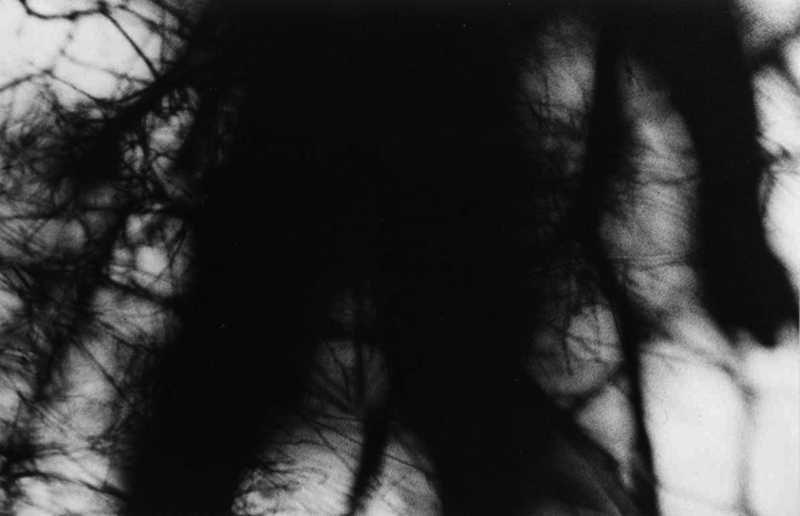
MK: For me, art history is important. I think that the situation of young people born in the 1990s is different from that of my own generation. They happen to have been born into an information rich society that’s superficial. Because of that, perhaps they’re interested less in formalism and more in textures or the unexpected, by which I mean taking familiar, everyday objects and shooting them with medium or large format cameras, or in close-up, in order to create a raw “anti-everyday” reality. For those photographs, composition is difficult to create. I think that the fad of shooting 6×6 color film of the last few years represents the desires of both photographers and viewers. In my opinion, I think that the role of art has historically been and continues to be one of solving life’s mystery. I also belong to this history, but I use my awareness of what has been done in the past to forge my own way of art. Photography is also an art of form. I want to grasp the mystery of life with the help of the concepts such as beauty or formal “balance.” Why do people say that something is beautiful, or why do people find balance in something — what do such things mean to us?

In front of me, the world spreads out, uncontrolled by my intentions. I had such a sense when I took these photographs, and wanted to take photographs where the past and the future meets.”

JE: Since art history is important to you, I’d also like to ask you about your own history. I believe that your education at Tokyo Zokei University, where you graduated, and your relationship with Kiyoji Otsuji, were crucial to your development, weren’t they?

MK: Yes, that’s right. Before I entered university I had studied the practical basics of art at a kind of “cram school.” So, I was able to concentrate on photography at university. When I was in my forth year, one of my professors, Kazuto Miura, introduced me to Otsuji-san, who many of my professors had studied under. At that time, he was already retired and pretty much confined to his home, and so some students including me went to visit him and to arrange his negatives in his house.
Masahiro Kodaira: From "Onbashira" series
Whenever I visited him, I always felt like I was visiting my grandfather. I visited his place almost every day for four or five years, before he passed away. What I learned from him is that I should continue to pursue my own way of photography. Like some other photographers who also had close relationships with him often say, I always ask myself, “If he were living now, what would he say about my photographs?” This question is a kind of litmus test for how I think about my own work.

Incidentally, “Dr. Lorentz’s Butterfly” wasn’t the title I originally had, but Otsuji-san pointed out to me that my original title sounded stiff, so I changed it. The day that I decided on “Dr. Lorentz’s Butterfly” was also the day that Otsuji-san passed away, so I wasn’t able to share with him the new title of my show.

JE: What originally triggered your interest in photography?

MK: When I was a kid, I already had an interest in art. The first book I bought when I was a junior high-school student was an anthology by Escher. Then I came across the book by Jung and Wolfgang Pauli called “The Interpretation of Nature and the Psyche.” After reading this book, I felt that I had found a clue as how to articulate in art what had been up until then just vague thoughts.

JE: Does that mean that you were first interested in producing something artistic or cultural in the broad sense, rather than specifically photography?

MK: Well, first of all, I wanted to be a painter, so I thought it would be better for me to study painting. But some friends that I made at the “cram school” were able to paint precisely what they wanted to paint on canvas. In such an environment I realized that it might be difficult for me to be a painter. So, when I entered Zokei I chose to join the department of design and gave up my desire to be a painter. At that time I also had interest in typography and graphic design.

JE: Then you came to photography?

MK: Yes, that’s right. I tool some photography classes, and found that I wanted to pursue photography. When I saw my professor [Akihide] Tamura sensei’s work entitled “Afternoon” at a group exhibition in 1993, I was taken aback, and this work was the trigger for me to start concentrating on photography. I learned a lot from one class in particular. This particular class required me to visit about 100 galleries within a year and to write an essay about each exhibition I attended. Also at this time I was “collecting” photography and art magazines to supplement my studies. When I started studying on photography, I thought it was easy to take photographs. However, when I saw that taking photographs of the world around me was a way to represent myself, I came to realize the profoundity of photography as a medium.

JE: Your next exhibition after “Dr. Lorenz’s Butterfly” was “Onbashira.” I imagine that you had to take some risks to show “Onbashira.”

MK: Well, you know, the show “Onbashira” deals with a festival in Japan*, so quite a few people reacted like, “Why did you take photographs of festivals?” Many people who had visited “Dr. Lorentz’s Butterfly” expressed disappointment and said it would have been better if I had kept the direction of that show. But some photographers also appreciated this exhibition. Although basically I seldom take photographs of people, I wanted to experiment with taking snapshots of people for this series.

Masahiro Kodaira: From "Onbashira" series
JE: Certainly at first glance, this series appears to be different from “Dr. Lorentz’s Butterfly.” For me, as someone who knows your position vis-à-vis the history of formal art and photography, some parts of “Onbashira” seem connected with the conception of the previous show. Both exhibitions show an adventurous pursuit of the possibilities of photographic form. Yet each show is received by viewers as completely different. If people concentrate only on the content of your photographs, there is a danger of them missing the forms that are there for them to discover, though.

MK: It’s easy to miss this aspect of my photography, because they directly represent the past traditions of Japan.

JE: People tend to look only at the surface content of photographs and overlook the aspect of photography as a transformed reality. But such way of looking is not enough. At a festival which is very dynamic, you look at the movement of the world in front of you through your viewfinder and release the shutter.

MK: In front of me, the world spreads out, uncontrolled by my intentions. I had such a sense when I took these photographs, and wanted to take photographs where the past and the future meets.

JE: Finally, could you let us know what you are doing now?

MK: I sometimes do black and white printing, and I had been making new prints of Otsuji’s work for the show called “Jikken-kobo,” (“Experimental Workshop”), which will be held in the UK in this October. I myself am preparing for a solo exhibition called “Tsuzukinokawarini” to be held from June 9 (Tues.) to 15 (Mon.) at the Gekkoso annex KONPARU Gallery in Ginza, Tokyo. Then, if possible I would like to publish a book of my work.

* Onbashira (literally “honored pillar”) is a festival that takes place in Nagano Prefecture once every six years.


Yu HidakaYu Hidaka is an Assistant Professor at Gunma Prefectural Women’s University, where she teaches on visual culture. Her book, Reading Contemporary Photography: Toward Democratic Vistas, will be published by Seikyu-sha this June. She has written on photography and other forms of visual media for various Japanese publications, including Studio Voice and Asahi Camera. She received her MA in the Course of Culture and Representation from Tokyo University.

Tales of Glass and Ceramics, Pt 2

Continued from Part 1

The early 1980s saw two major changes for Contax: in 1983 Kyocera Corporation acquired the Yashica company. Kyocera is an industrial conglomerate with a very diversified product palette ranging from industrial ceramics (which gave the Kyoto-based company its name), to audio components, photo copiers and laser printers, solar cells, mobile telephones (due to a merger with Sanyo Electric) and ceramic kitches knives, just to name a few. Kyocera inherited Yashica’s agreement with Zeiss and an expansion of the photography division was pursued by developing new products such compact cameras and even a medium format system, all equipped with Zeiss lenses.

Another significant development of that decade was Minolta’s introduction of the 7000 AF (MAXXUM 7000) 35mm SLR camera. It marked yet another significant milestone in photography as it was the first camera to feature both integrated auto-focus (AF) and motorised film advance.

Minolta 7000 AF (MAXXUM 7000) 35mm SLR camera

Obviously this was foreseeable for Zeiss and Yashica. The pressure to introduce AF had been building up over a long time. Yashica, perhaps unsurprisingly, was prepared to go ahead; a prototype based upon the Contax 137 SLR with a coupled Carl Zeiss 50mm f1.4 lens was presented at Photokina in 1982 and its workings were, in principle, identical to the 7000 AF introduced three years later. However, Zeiss disapproved of AF. It feared that the optical performance of its lenses was compromised by the entailing use of lighter materials. Especially the helicoid, the device controlling lens to film distance for focussing, had to be made of a lighter material to let the rotation be carried out by electric motors. The helicoid and the spacer rings, positioning and holding in place lens elements, had to be made of plastics. These components were not up to the longevity and optical expectations of Carl Zeiss. Consequently the plans for a conventional AF camera were dismissed and R&D continued.

An alternative to moving the lens for focussing was to move the film plane. This seems to be an alien thought after years of being used to turning a lens to achieve focus. Still, since the beginning of photography, using a view camera, it is normal to focus by moving the film plane — which is exactly what the Contax AX was designed to do when released in 1996.

The AX was an incredible engineering feat. It is said that over one hundred patents have been granted regarding the technology in the camera. At the core, two main technological achievements made focussing possible: the first is ceramic technology; a very finely finished ceramic rod acts as a guide rail and motor part to move the film plane forward and back. Secondly, an Ultra Sonic Motor (USM) drives the ceramic collar and an inner camera body forward and back on the rails to obtain focus.

Contax AX
Contax AX

USM offer precision control and extremely quick and quiet operation. The Automatic Back Focusing system on the AX can move from minimum focusing distance to infinity or back in less than 450ms, irrespective of focal length. The Contax AX utilized three computer CPUs to control all of the camera’s functions, a more sophisticated computer system than in any other camera. One of the CPUs controls the Automatic Back Focusing system, one to oversee auto-exposure, and a third, the Indicator CPU controls wind/rewind, shutter charging and viewfinder indications. Almost a byline is the novel concept of user configurable camera parameters, called Custom Functions, which are common today.

In 1994 attention once more shifted to rangefinders. The Contax G series was a 35mm rangefinder system with interchangeable lenses — with a difference. The G1 camera was unique in that it offered auto-focus by means of a rangefinder. Instead of displaying a fixed magnification viewfinder, the first G1 had a zooming viewfinder adjusting itself depending on the lens in use. The viewfinder is very similar to an SLR displaying focus confirmation and distance and of course light metering information.

Contax G1 AF rangefinder advertising in Oct 1994 issue of Nippon Camera
Contax G1 AF rangefinder advertising in Oct 1994 issue of Nippon Camera (click to enlarge)

Unlike AF in an SLR camera determined through the lens alone, the G1’s auto-focus used the typical twin-window rangefinder. The difference was that the alignment determination was performed electronically, not by the photographer, by means of a phase-detection sensor. The system was very novel but to this day draws criticism from many rangefinder photographers as it did not conform to the classic heritage cameras like the Leica. Auto-focus, auto-winder, no frame lines, all in a modern titanium body were pushing the RF paradigm. The first incarnation became known to be finicky at time with AF speed and accuracy, improved in the G2 follow-on model. With the G series Zeiss and Contax celebrated a return to its rangefinder heritage. Rangefinder lenses are generally assumed to offer superior optical performance as there is no need to accomodate the reflex mirror box of an SLR, demanding a greater lens to film distance. Even by today’s standards the G lenses are considered stellar performers in their class. Unfortunately the G lens mount is proprietary and lenses cannot be used on other cameras without modification.
By now the digital age loomed, and unlike with auto-focus, Kyocera Contax could not afford to miss the boat. A number of compact digital cameras were made, but the top of the line was the Contax N series. The Contax N was an autofocus 35mm type DSLR system, announced in late 2000, and began to be sold in spring 2002, after several delays, for around ¥800,000 (~US$6550 at the time). Three models were made: the N1, the NX and the N Digital, an early Digital SLR. The Contax N Digital was the first professional digital SLR with a full frame size CCD chip (made by Philips).

Contax N1 DSLR
Contax N1 DSLR

The N-series bodies required new N-Mount lenses which made them incompatible with the older manual focus SLR system. A total of nine lenses were produced and received high acclaim. An adapter that allowed lenses from the 645 medium format system to be used on N bodies was also offered. The N camera system itself was a market failure. While some aspects worked very well, like colour fidelity and resolution afforded by the Zeiss lenses, the camera also had serious shortfalls like sensor noise and power consumption, although that may not be too surprising provided it is a first generation digital product. Many observers criticised Kyocera’s haphazard release of the system and in retrospect this could be interpreted as an indication of a lack of commitment to the camera division. Contax users had their hopes pinned on an improved revision of the N-series DSLR, however on 12 April, 2005 Kyocera Corporation announced that it had “decided to terminate CONTAX-branded camera business. Although Carl Zeiss and Kyocera have entered into a long term co-operation regarding the development, production and sale of CONTAX-branded cameras, Kyocera has decided to terminate such business due to difficulties in catching up with the recent rapid market changes.”

In 2008, Kyocera sold the trademark rights of the Yashica brand to a Hong Kong-based company to use on photo products such as digital cameras, digital camcoders, digital photo frames, portable DVD players, digital audio players, digital voice recorders, binoculars, mobile phones and SD cards — undoubtedly a sad fate for any camera maker with such great history, but not the first and probably not the last time.

Contax Salon
Contax Salon

What else is left in Japan of the proud Contax heritage and history? Like most other camera manufacturers Contax maintains a photo gallery called Contax Salon in the centres of Tokyo and Kyoto. I have to admit though that the work on display there is of little interest as it falls into the mainstream nature and landscape categories so often seen in Japan. Like other manufacturers there is a Contax Club.

Next to the Contax Salon Tokyo is the Kyocera Service Station (other locations also have their Service Stations) which is able to supply spare parts and little pieces like caps and covers for Contax cameras and lenses. Repairs are also accepted here for the the products still supported by the company (including the ROM upgrade for the G1 rangefinders); a list can be found here. Often repairs are impossible because parts are no longer available. In such cases a third-party repairer needs to be found, which for electronic cameras might not be easy.

The last remaining question is: what will happen to the great Contax name? Statements issued by Zeiss in reaction to Kyocera’s announcement in 2005 indicate that the agreement between is still in effect: “Kyocera has several years left of its agreement with Carl Zeiss. If they keep paying the minimum royalties, they could block any developments. Currently, we cannot initiate talks with a possible new partner until Kyocera makes a decision. In the meantime, they will have to keep using the Contax brand name or give it up.” Kyocera has not commented on the licence issue.


My personal experience with the Kyocera Contaxes is very good. I own a RTS II with a Distagon 28/2.8. I bought the RTS II due to its enormous focussing screen, it shows 97% of the image taken on film, which is great. The RTS II also has the best shutter release button I have ever experienced. Since it is electrical, there is only very light resistance and immediate response. Moreover it has no half-press, the first time you use it you wonder what is going on and how to obtain a meter reading. For that another button is placed in the front of the camera. My only qualm with it is the placement of the shutter speed dial on the left. It should really be on the right where the ASA/exposure compensation control is. With a manual focus camera your left hand is occupied focussing, so it is difficult to change shutter speeds as well.

The other Contax I own and currently actively use is the G1 rangefinder. A lot has been said about its perceived shortcomings, but perhaps it is often misunderstood. The G1 is an autofocus, autoexposure rangefinder camera offering a great degree of user control to meet the demands of the experienced photographer. This is not a Leica, and not trying to be one. This system offers its own advantages and would even complement a manual focus rangefinder: focussing in low light, focus tracking of moving subject, motor wind, auto exposure with bracketing just to name a few things that become easily possible.

The most important aspect of the Contax G system is the line of Carl Zeiss T* lenses that rival, or might even surpass, the quality of Leica lenses — at a fraction of the price.

The German-Japanese Contax venture was extremely popular in Japan and I think with the history we recounted in this article it is easy to understand why. Here are the world’s best engineers working together in creating top quality photographic products, with a great heritage. This is something that the Japanese very much appreciate. The popularity of Kyocera Contax has an interesting side effect: since there are so many cameras and lenses out there, with the change to digital enormous quantities of Contax equipment is reaching the second hand market at extremely low prices. Obviously these are still very capable cameras, and the quality of the fine lenses is not diminishing. Using an adapter, C/Y lenses can even used on digital bodies like the Canon EOS or Micro Four-Thirds bodies like that of Panasonic Lumix G1.

Please consider the Japan Exposures Equipment Sourcing Service if you are looking for any of these cameras.


Ken Rockwell’s review of the Contax G system

Contax Cameras UK

Contax and Zeiss Ikon on Camerapedia

Very detailed information on Contax RTS, RTS II and RTS III Series SLR camera pages

Film Matters — The Choice of Film in a Digital Workflow

Film Matters

Text and images by Christoph Hammann for Japan Exposures

If you‘re using color negative film in a hybrid workflow, does it matter what film you use? Or is it true that you can do everything in post-processing? Essentially, in the digital age, what exactly does your choice of film itself bring to the table?

I had occasion to ponder these questions while testing the new Kodak Ektar 100 against DNP’s Centuria 100 film. While the former is lauded far and wide for it‘s fine grain and color reproduction, the latter is said to be a no-frills, mass-market oriented version of Konica‘s color negative film with high color saturation.

DNP Centuria 100
DNP Centuria 100

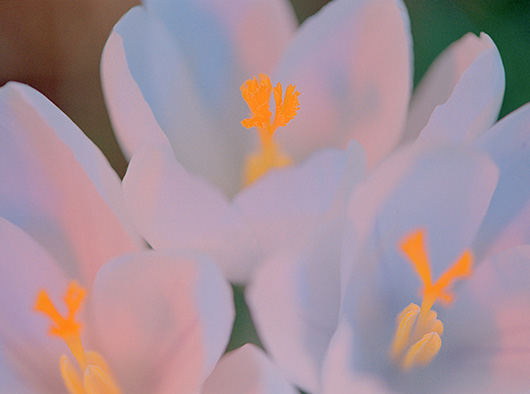
For the purpose of this comparison, I took photos of a field of crocuses in Düsseldorf‘s Nordpark at the beginning of February. In most shots, I used a Micro-Nikkor 105 VR and a R1C1 macro flash kit with colored gels.

DNP Centuria 100
DNP Centuria 100

I also used these two films in a studio lighting workshop held by Jens Brüggemann. This proved to be an excellent learning experience! The shot above shows a mixed light situation (daylight from above and the flashes modeling light out of a huge umbrella from front left) rendered by the Dai Nippon Printing film.

The lead image on top shows Kodak Ektar coping with light from two strip softboxes aimed at the model from 90 degrees left and right.

Apart from these single images, how did the test go?

Methodology first: I took care to develop the films the same way, putting one of each in a Jobo 1520 tank and developing them with the Naniwa Color Kit N.

Film Matters

The negatives were scanned with a Minolta Dimage Scan Elite 5400, using no anti-grain dithering and the same light grain reduction in both films.

DNP Centuria 100 at left, Kodak Ektar at right

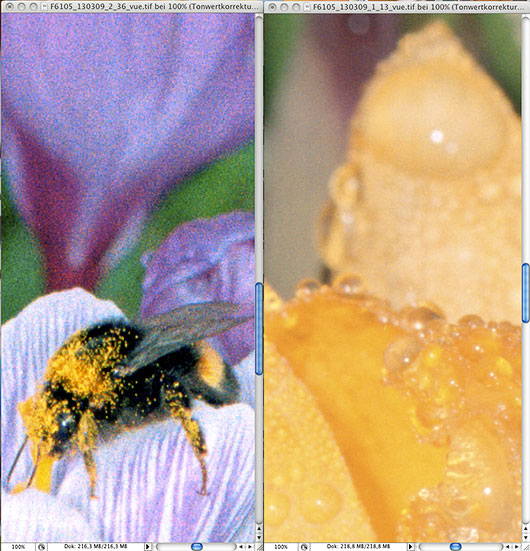
Grain did indeed turn out to be a major difference between the two films. The 100% crops in the picture above had their levels adjusted, but were not sharpened or reduced in grain. Kodak‘s claims of extremely fine grain for the Ektar are fully justified.

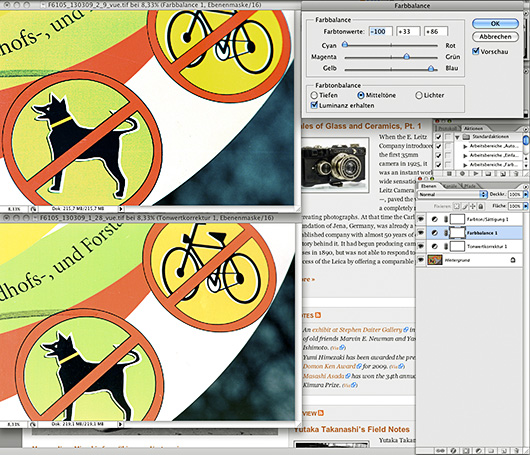
DNP Centuria 100 on top, Kodak Ektar at the bottom

Color balance was markedly different, too. The prohibition sign in the picture above was photographed with the macro flash (without gel filter, of course!) and white-balanced with a levels layer on the white circle denoting the bike‘s crankset. The sign‘s colors weren‘t nearly as garish as the DNP film makes them look, more faded and muted as in the Ektar version. So, a high saturation color negative film the DNP Centuria 100 surely is!

DNP Centuria 100 on top being color corrected with a color balance and a saturation layer

When I tried cheating and to adapt the color correction of DNP Centuria to match the one of Kodak Ektar with layers in Photoshop, the green parts of the sign quickly fell apart along the film grain. I could neither get the same yellow nor do much about the saturation. They don‘t call it a color balance for nothing!

DNP Centuria 100 at left, Kodak Ektar at right

Skin tones suffer under the DNP film‘s color rendering, while I find Ektar‘s skin tones to be quite natural. Granted, these are two different models with different casts to their skin, but the left one wasn‘t that orange-y. And to be fair, the all-rounder DNP 100 has never claimed to be a portrait film.

If all that sounds like I‘m slamming the DNP Centuria 100 film, making an easy target out of it, I‘m not. In the crocus shots, I actually prefered it‘s saturation and color rendition. I also see a role for it photographing urban environments in their multicolored facets and a kind of grainy hastiness. Kodak‘s new Ektar is more true to life, though — mind you, it‘s colors are saturated enough. It has stunningly small and unobtrusive grain. If you are attracted by peculiar color and light combinations and want to capture them just the way you saw them, this is the film for you.

You have the choice, and that‘s the beauty of using film for color photography. Your results don‘t have to be predetermined by the sensor in your digital camera. Film matters, so take your pick and have fun.


Christoph Hammann is a fine art photographer from Waltershausen, Germany. He works with traditional film and silver halide papers as well as digital post-processing and alternative printing techniques. His website is “Mostly Black & White”.


 We have DNP Centuria 100 film available at very attractive prices in our web shop. Why not treat yourself to an abundant 100 pack for summer?

Home on a Big Road — Gallery KAIDO (街道)

gallery KAIDO utility pole sign
gallery KAIDO utility pole sign -- photo by Tyler Ensrude

Text and images by Tyler Ensrude for Japan Exposures

Have you ever been to a gallery and felt as though the reception almost didn’t want you there or could care less that you entered the room? Even in Japan, a country known for it’s outstanding customer service, some places can still hold their noses in the air a bit when it comes to big art in a small space. Maybe it’s my foreign face that frightens the staff working in some galleries here to go back into the storeroom or look busy? I don’t know.

Actually, I take that back. I have had very friendly experiences in and out of Japan from helpful staff or artists who are very grateful to know their work is appreciated. Especially in parks, cafes, some more local/down-to-earth galleries and people doing joint exhibitions around Tokyo. I even remember a few free alcohol occasions! I think it must be the sterility of some of the bigger name galleries that gets to me sometimes and I think that sterility makes them come off as inhospitable or cold.

So despite my slight frustration at times I love many Tokyo galleries. Many of them are very impressive and open to new artists, but usually come at a hefty price. Young photographers and artists could always use more places to show their work at a price and a location that won’t make them think Ginza is actually made of silver, and fortunately some places have been popping up lately.

Ginza may be known for it’s pricy shops and exclusive, but very attractive, galleries. But if you want to get a good taste of what Tokyo really has to offer, you may be in for quite a hike. Galleries are rather spread out around Tokyo, especially photo galleries. You can wander for ages and it’s hard to hit too many in one day. If you’re a gallery savvy visitor to Tokyo, but you’re not sure where you’re going, this can easily turn a day of casual gallery hopping into a frustrating day of hitting up police boxes fumbling over a tiny map and talking to policemen who think you’re trying to find the nearest place to develop your film.

If you want to take a weekend afternoon to hit one of the best off-the-beaten-path photo spaces while you’re here, one that greets you with a smile, talks with you like you’re an old friend and maybe even stuffs a few extra post cards in your pocket as you’re leaving you should definitely try to find gallery KAIDO.


You keep expecting someone to come walking out of a room wearing a bathrobe and slippers!”

I’ll try and give you a little help getting there, for while it’s not the easiest gallery to find, it’s definitely worth the trek. First, take the Tokyo Metro Marunouchi Line (subway) to Minami-Asagaya station. (You can also take the JR Chuo Line to the area, but the Marunouchi Line is more convenient). It’s only a few minutes from Shinjuku by train or subway. When you get there look for or ask how to find Ome Kaido (Ome Avenue). Gallery KAIDO is only a few minutes walk off the side streets near Ome Kaido. Ome is a busy road that starts from way-out-west Tokyo and ends around Shinjuku and is actually the inspiration behind the gallery’s name itself.

I was surprised I remembered how to get there without the use of a map the second time I visited. The map makes it look somewhat simple, but amongst the many turns, the never ending rows of houses and the narrow paths they call “streets” here, things can look quite similar. I took a few shots of some landmarks along the way to help you find the right corners, along with a scan of the gallery’s flyer map with some translated English.

gallery Kaido English map -- click for larger map and photos along route

Once you’re in the vicinity, the gate of gallery KAIDO is the next challenge. You’ll see a sign on a utility pole telling you to make a left. But then you’re stuck guessing where to go next, because you’ve turned into a dead end. If you live in Tokyo, it could very well be exactly what your apartment entrance looks like and there isn’t really much more than a small sign on the gate. It’s on the left side, about half why down the dead end. From this point, walk up the steep, steel steps, take off your shoes in the entryway and… it sounds like home already, doesn’t it?

As I mentioned before, you’ll probably be greeted with a smile and the curiosity of an old style Japanese inn owner welcoming a weary guest. If you’re not the shy type and you show enough interest and have some time, you may even be offered a cup of tea. It seems a bit like you’re walking through someone’s apartment and you keep expecting someone to come walking out of a room wearing a bathrobe and slippers! It feels old, but warm and real. It’s basically two bedrooms of photos with some closed rooms I only assumed were workshop space or possibly a darkroom. One of the rooms, which was apparently the old kitchen, is now the gallery gift shop.

If you come on the right day and happen to know your Japanese photographers, you maybe even get to meet gallery KAIDO’s creator, the renowned photographer Koji Onaka. Onaka-san’s most recent photo book, A Dog In France, is starting to gain Onaka attention overseas and is a great look into his life over 20 years ago. [The Japan Exposures online bookshop has signed copies available. — ed]

Fifteen years ago Onaka-san had a gallery in Nishi-Shinjuku, which he also called KAIDO near the same Ome Avenue. That has since closed. Several years ago, Onaka-san and his wife Yuko, who runs the gallery gift shop, started looking for a new space not so near the bustling Shinjuku area. After a thorough internet apartment search, they came across the current KAIDO in Asagaya which also happened to be near Ome Avenue.

His original intention for the Asagaya gallery KAIDO was unclear for him at first, but he mainly intended to show his work there, and use the extra rooms as darkroom work space and Yuko could even use the space for some of her own interests. But recently, he’s converted it into a full-fledged gallery, welcoming his students to show their own work there for several weeks at a time. His “students” are actually attendees of his weekly workshops he holds at Kaido and random places around Tokyo and Japan. [Japan Exposures Cover Artist Sachiko Kadoi is a past workshop participant. — ed] Each week Onaka offers advice to workshop participants and gives critiques of their work. (Workshop info and exhibition schedules, as well as pictures of past critique sessions, can be seen at the workshop’s blog — Japanese only).

gallery KAIDO exhibition postcards for recent shows

The most recent works on display (from March 20th-29th) in KAIDO’s tiny rooms when I visited were a small series of black and white images by the young Tatsuhiro Nakahara entitled Machi-Nagara (While Waiting), all of which were taken in his hometown of Hiroshima near his father’s farm. In the “PIN-UP Gallery” a playful color series called “empty, but” from Miki Iwaoka of Yokohama residents. Also a set of about 12 images from Onaka-san himself, all printed in Onaka-san’s wonderful signature mundane, smoky-grey style and taken between 1994-1999 in Hakodate, Hokkaido. Some past exhibitions included works by Tomomi Matsutani, Takeshi Dodo, and Shuhei Motoyama.

I found KAIDO a great place to see some straight-forward, down-to-earth images from some photographers who seem to love Japan and aren’t afraid to show it like it is. It’s kind of what I’d expect from a Japanese gallery in some ways after living in Japan for many years myself. It’s not exactly Ginza, but hey, Ginza’s just a dressed-up place made of silver and it’s too crowded anyway.

So, on top of the fact that gallery KAIDO provides that real, or even gritty Japanese art experience in a somewhat surreal Tokyo atmosphere, you also can rest assured that you’ll be welcomed back. KAIDO is open Friday, Saturday and Sunday from 1pm-7pm.


Tyler EnsrudeTyler Ensrude grew up on the plains of rural Wisconsin in the United States and has lived in Tokyo since 2002. He has a degree in photography and graphic design from the University of Wisconsin and is a contributing writer and photographer for several publications in and outside Japan. His current projects include research on foreign photography within Japan as well as Japanese photography, photography books, culture and music. He can be found online at www.tylerensrude.com and www.tylerensrude29.blogspot.com.