All posts by Kurt

Kazuyasu Matsui Gallery

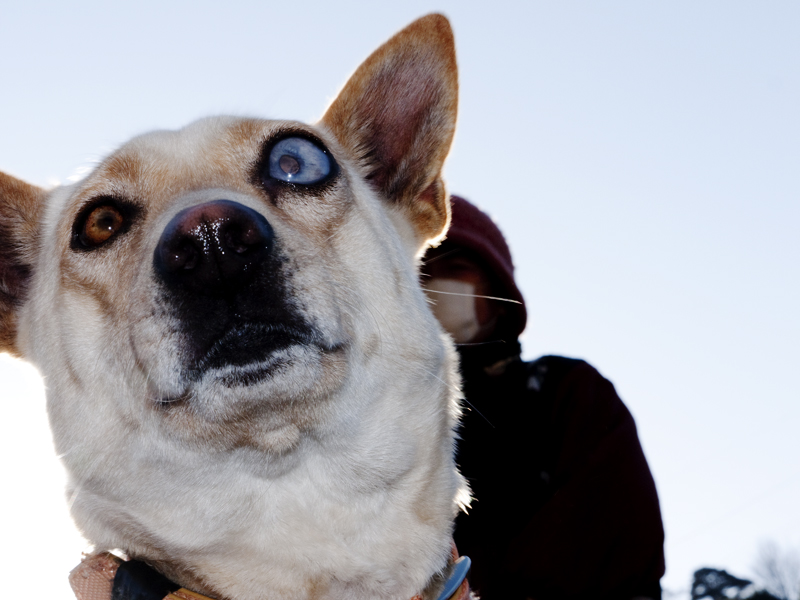
Last year marked the 20th annual “New Cosmos of Photography”, a competition started in 1991 by Canon Camera in an effort to identify young, emerging photographic artists deserving of our attention. Judged by a combination of working photographers and critics (Nobuyoshi Araki, Daido Moriyama, and Kotaro Iizawa are among those who have judged the competition in the past), this year saw 25 award winners from among 1,276 entrants in a competition judged by photographers Katsumi Omori, Masafumi Sanai, and Mika Ninagawa, and critics Minoru Shimizu and Noi Sawaragi (each judge chooses one Excellent Award winner and five Honorable Mentions).

The following gallery of images from Kazuyasu Matsui’s Paradise☆INGA (one of Omori’s Honorable Mention picks) is our third gallery from the 2010 competition.


“Every day, in the area of the small town in the mountains where I live, I take photographs while going about my job as a milkman. On my days off, I head deeper into the mountains or to the sea, camping or sleeping in my car, and taking photos. When I’m shooting, it often feels like those days when I was in grade school, and enjoying summer vacation just playing out in nature. “If only every day could be like summer vacation,” I think to myself. Shooting photographs gives me that kind of feeling, and I end up choosing photographs that show more than I have aimed for.”

— Kazuyasu Matsui

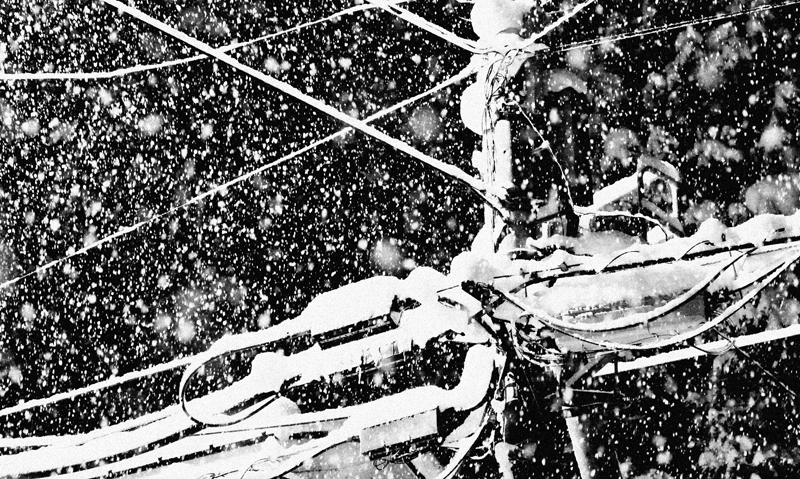
Yu Kusanagi — from Snow

Yu Kusanagi was born in Akita Prefecture in 1982, and graduated from the Tohoku University of Art and Design in 2007. He has been exhibiting his photography since 2003, picking up several awards including one from Konica Minolta in 2003. Most recently, in the Fall of 2010 Kusanagi’s Snow series, from which the above photo comes, was an Honorable Mention selection by photographer Mika Ninagawa for the annual Canon Cosmos of Photography competition.

More work from Snow can be seen in a special extended Japan Exposures gallery.

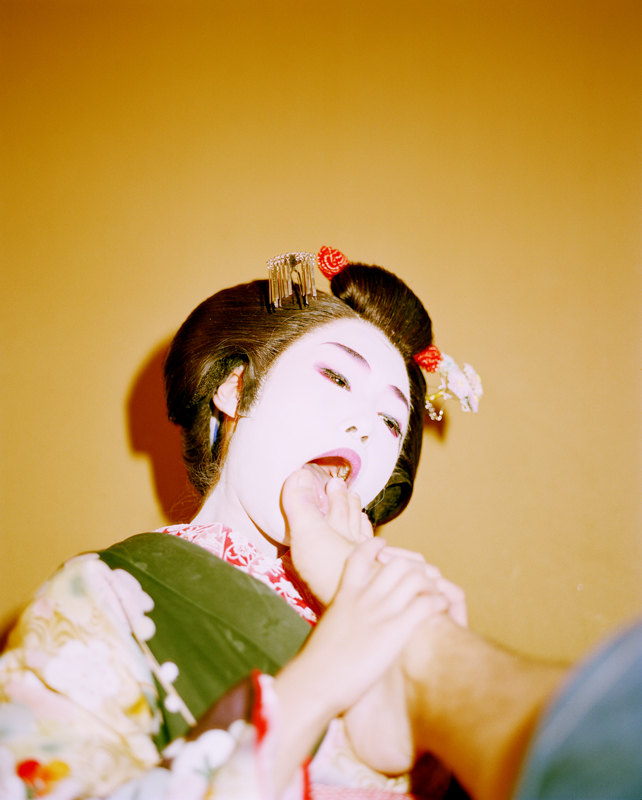
Nobuto Osakabe — from Holiday Making

Nobuto Osakabe was born in 1984 in Shizuoka Prefecture. In 2003 he entered Tokyo Polytechnic University, graduating in 2007 and winning the university’s Fox Talbot Award in 2006. Since finishing his education Osakabe has been working as a commercial photographer while pursuing his own personal work, with exhibitions at Nikon Salon in 2007 and Konica Minolta Gallery in 2009. This autumn, Osakabe’s Holiday Making series, from which the above photo comes, was an Honorable Mention selection by photography critic Minoru Shimizu for the annual Canon Cosmos of Photography competition.

More work from Holiday Making can be seen in a special extended Japan Exposures gallery.

Book Store Airmail shipments to U.S. to be temporarily delayed

Delayed graphicUpdate: We are happy to report that as of December 1st, Japan Post has started to once again allow Airmail packages bound for the U.S.
Due to tighter security measures related to cargo bound for the United States, which includes international mail, as of this Wednesday, November 17, Japan Post will for the foreseeable future not accept Airmail packages bound for the U.S. that weigh over 16 ounces (or 453 grams) from non-registered shippers. This effects all EMS, Standard Airmail, and Economy Airmail (SAL) shipments. As far as we understand, this does not affect Surface shipments. With the exception of a few titles, most books we sell in the bookstore weigh more than 16 ounces. Please note that these restrictions only apply to items bought from the bookstore and not from the Japan Exposures Shop, which is back to operating as normal after their autumn holidays.

We are doing our utmost to fulfill all outstanding bookstore orders bound for our U.S. customers before the cutoff, but for any orders received from the US from here on out, a temporary delay while we adjust our shipping methods will occur, so we ask for your understanding. You can of course still place orders and we will hold the books for you until such time as we can make the delivery, or choose Surface as your shipping method. If you are worried about securing titles with limited availability, or wish to inquire about the status of an existing order, or wish to reconfirm time frames prior to placing your order, please feel free to contact us.

We know that, with the Christmas shopping season upon us, these restrictions couldn’t have come at a worse time. Please understand that this situation is largely out of our hands but we are doing our best to find alternatives and to satisfy our customers as best as possible. We are confident that most orders intended for Christmas will reach you in time for the holidays.

Kazuyoshi Usui — from Bullet Boy

Kazuyoshi Usui is a Tokyo-based photographer born in 1975, and once studied under Eikoh Hosoe at Tokyo Polytechnic University. He makes his living as a commercial photographer. In his personal work he’s interested in exploring the borders between lies and truth, particularly in a cinematic way. In 2006 he published “Macaroni Christian”, and is currently at work on a series entitled “Bullet Boy”, of which the above photograph is part of.

Japan Exposures Now Carrying Super Labo Titles

Japan Exposures is pleased to add small Japanese publisher Super Labo’s books into the fold of publications being sold in the Japan Exposures bookstore. While we don’t shy away from established, mainstream publishers, what really tickles our book nook’s chin are the small publishers carrying on the tradition of the Japanese photobook.

Super Labo is not only doing that, but bringing a little bit of the Japanese photobook to established Western photographers also known for the craft and care they have brought to their photobooks — photographers like Alec Soth and Todd Hido.

Super Labo is the creation of Yasunori Hoki, an extremely nice and courteous man whom I had the pleasure of meeting at the recent Tokyo Photo Fair event this past September. Hoki used to run Gallery White Room on Tokyo’s ultra fashionable Omotesando Boulevard, bringing artists like Eikoh Hosoe and Joel Meyerowitz to the Tokyo high street. Hoki had to close the gallery in early 2009, but through the experience of publishing catalogs to accompany the exhibitions he put on he established Super Labo. In fact, it was through the relationship he had established with Meyerowitz during the creation of a special exhibition catalog that helped get Super Labo off the ground, and get other non-Japanese photographers interested in collaborating on these small, almost zine-like books.

While some photographers like Meyerowitz have used it as a platform to revisit in an abridged form work from the past (Redheads and Wild Flowers), or used it as a print outlet for a project originating in a different medium (Alec Soth’s Ash Wednesday), others like Todd Hido have conceived books specifically for Super Labo (and according to Hoki, Hido really got into the making of his book, Nymph Daughters). It’s perhaps no wonder that Nymph Daughters is the first of Super Labo’s books to go out of print, although Japan Exposures was able to secure a few copies before it did.

While the majority of Super Labo titles so far have featured non-Japanese photographers, books by Naoya Hatakeyama and Takashi Homma are on the horizon, and combined with already published titles like Osamu Kanemura’s Stravinsky Overdrive and Tomonori “Rip” Tanaka’s Night Riders, certainly Super Labo cannot be accused of ignoring Japanese photography.

Here’s a list of the Super Labo titles we’re currently carrying (those marked with a * indicate titles that won’t be restocked when the extremely few copies we have are sold):

Ash Wednesday, New Orleans, by Alec Soth*
Birds, by Stephen Gill
Coming to Grips, by Ed Templeton *
Night Riders, by Tomonori “Rip” Tanaka
Nymph Daughters, by Todd Hido *
Redheads, by Joel Meyerowitz
Stravinsky Overdrive, by Osamu Kanemura
Wild Flowers, by Joel Meyerowitz

Books by Hiromi Tsuchida and Issei Suda

(You can watch the video at a larger size at Japan Exposures’ page on Vimeo.)

Back by popular demand (I think!), I’ve created another video book review. The last proper one of these I did was over a year ago (somewhat ironic considering I created the first ones as a way to save the time it would take to do a proper written review), so it’s certainly about time to have another go at them.

This time I look at two books that collect material shot in the predominantly rural areas of Japan in the 1970s: Zokushin, by Hiromi Tsuchida, and Minyou Sanga, by Issei Suda. Both works — Zokushin a 2004 reprint of a bona fide classic (see Vartanian/Kaneko, Japanese Photobooks of the 1960s and ’70s, p. 192-196), Minyou Sanga a relatively recent publication of source material shot in the late 70s — were part of a distinct trend among Japanese photographers such as Daido Moriyama, Shomei Tomatsu, Yutaka Takanashi, Masatoshi Naito and Kazuo Kitai, to name a few, who explored subjects and landscapes far removed from the urban centers of Japan.

As I explain in my commentary on the video, both books ostensibly look at the festivals and rituals of Japan, particularly in rural areas where festivals and folk traditions continue to this day to exert a strong influence and sense of community. Nevertheless, they are as far from a “The Festivals of Japan” coffee table book sensibility as you are likely to find. While these festivals are the backbone of both books, I would argue that the books are much more portraits of people and communities trying to maintain an identity and connection to the past amidst a rapidly developing and urbanized Japan of the 70s.

俗神
Zokushin

Photographs by Hiromi Tsuchida
Revised edition, published in 2004 by Tosei-sha; hardcover with dustcover; 240 pages, 115 b/w plates; 30cm x 30cm; photo captions, afterword essay by Kazuhiko Komatsu, cover flap reprint of 1976 text by Toshinobu Yasunaga, and Tsuchida biography — all in English and Japanese; Tsuchida’s short text on the occassion of the reprint in Japanese only. (Please note that obi shown in the video is no longer available as per the artist’s request.)

民謡山河
Minyou Sanga

Photographs by Issei Suda
Published in 2007 by Tosei-sha; softcover with dustcover; 212 pages, 202 b/w plates; 19cm x 26cm; the book’s colophon is in both English and Japanese, but Suda’s two-page essay on the background of the project is in Japanese only. The photos are not captioned.


Both Zokushin and Minyou Sanga are available in the Japan Exposures bookstore.