Sachiko Kadoi was born in 1963 in Tokyo, and studied graphic design at Tama University of Art (Tokyo) from 1982-1986. She has been actively pursuing photography since 2003, and her first book Kadoi Sachiko: Photographs 2003-2008 was published in the Fall of 2008 by Sokyusha.
Here she talks to Japan Exposures about how she came to adopt photography as her means of expression, the importance of photographers as different as Michael Kenna and Koji Onaka in setting her on her creative path, and her thoughts about the man-made landscapes that comprise the dominant theme of her work.
The interview was conducted during the last week of December, 2008. In addition to the photographs that accompany this interview, please see our special Sachiko Kadoi gallery.
日本語
Japan Exposures: When did you first become interested in photography, in taking pictures?
Sachiko Kadoi: When I was 11, my father bought for me and my sister an easy-to-use half-frame compact camera for me to take with me on a school trip. This was the first time I took photos. Bringing a camera along on school trips is quite a common thing to do in Japan, but I was happy to handle the camera, and remember that it was interesting to take my own photos. It was when I was in college and bought myself a camera that I began to be more seriously interested in photography and in taking photos.
JE: You attended Tama University of Art in Tokyo, is that right?
SK: Yes, that’s right. I was interested in art from a young age. There were art books and catalogs of various exhibitions that my grandfather, who was a painter, bought into the house. I often looked at these and I also used to go to museums in my junior high school and high school days, and thought that I wanted to be a painter in the future.
But we lived in a small house, my parents, my older sister and I, and my grandparents, and I didn’t even have my own room, and so to go to art college was not easy. It was like the movie “Billy Elliot” [laughs]. I felt I needed to be independent from my parents after graduating from college, but it seemed impossible to be able to survive as a painter. So I entered the Graphic Design department at Tama University of Art. However, I came to feel that the advertising world was not a place I could be comfortable in, and ultimately, I felt that I wouldn’t be able to be happy doing that kind of work.
Thankfully, there was a photography class offered in the design department. I was interested in working in the darkroom, so it was a lot of fun. At that time, I bought a Canon 35mm camera. I still have it, and have used it without trouble for 20 years. I learned how to print black and white, as well as various other techniques little by little, such as toning prints, making photograms, solarization, etc. At any rate, I liked taking photographs. I preferred to take pictures more than looking at another photographers’ work. I didn’t look at photo books or go to photo galleries that much, compared to now. After graduating I liked to travel on my own, both within Japan and overseas, taking pictures as a way of enjoying myself.
JE: What did you do to support yourself after graduating?
SK: Rather than entering a design company after graduation, I did freelance work in the book publishing field. Mainly book design, but other various things related to books as well, such as editing, making objects for craft-making books for children, illustration, and so on. The books were mostly about natural science and geared towards children from kindergarten to primary school age, or books about practical skills and child-care counseling for child-care professionals. The work was really hard, there was a year I couldn’t have any holidays at all. During this time, I continued to hold on to the desire to do my own artwork, not photography but drawing or painting, but it just wasn’t possible because of my work load.
“
I looked at Kenna’s photos again after that talk, thinking that there were eight hours captured on this paper, and I began to look at photography in a new way.â€
JE: When did you begin to consider photography as a creative outlet?
SK: Well, I often worked with commercial photographers in the studio and on location, and I learned about book editing work in an editorial agency that had a stock agency attached to it, where we would get stock photographs mainly related to natural science for the books. So photography was always a part of my freelance work, but I began to consider photography as a creative outlet after I went to Koji Onaka’s workshop in 2003.
JE: How did your participation in that workshop come about?
SK: There were actually a lot of things that happened in 2003 to make that year a turning point for me.
There was a retrospective exhibition of Michael Kenna’s work in Tokyo, and I attended a slide show and talk that he gave. He talked about exposing one of his photos from his Ratcliffe Power Station series for eight hours. [Kadoi remembers it being Kenna’s “Study 31†from this series. – ed] Of course I knew that he used long exposures to make those photographs, but I was very surprised to hear it was eight hours! I looked at those photos again after that talk, thinking about a camera that looked at a power station in the quiet of the night and that there were eight hours captured on this paper, and I began to look at photography in a new way. I had the feeling that a photograph was not the flow of time and space passing before my eyes that the camera captured, as a mere tool, but rather that a photograph was the flow of time and space passing before the camera, as if it was like a living thing, with its own personality, and that I captured what it was looking at. At that moment, I had the strong desire to take photographs. Although this urge was a bit strange, seeing as I had been taking photographs for 20 years.

And then that summer I participated in Koji Onaka’s photography workshop held at the Yokohama Museum of Art. About 10 years ago a friend of mine who was into looking at photographs, knowing that I liked to travel by myself to various places, taking photos, asked me to go along with him to an exhibition of Onaka’s. He probably thought Onaka-san’s work would be good for me to study. I still remember seeing works of his shown in Ebisu that had been printed large onto rolls of paper.
“I guess that in doing nothing but the opposite of what Onaka-san talked about, I was not a good student.â€
JE: Could you tell us more about Onaka’s workshop, and what you learned from him?
SK: I think the most important thing that I got from the workshop was that it gave me the intention to exhibit my photos as a photographer. It was not only about my strong feelings towards art, but also that up until this time, because of my freelance work, I had had the idea that a person called “photographer†was someone who did commercial photography. So I hadn’t yet hit upon the idea that I could exhibit my own work.
Onaka-san talked to us about photography’s “時代性” (jidaisei) by which he meant a photograph’s ability to record the time period in which it was taken. According to Onaka-san, it is because of this ability that photographs derive their power. He also talked about “interestingness†captured in photographs. At this time, he was negative about even taking pictures in foreign countries because we didn’t know its jidaisei. He talked about the importance of being genuine when taking photos of subject matter with a strong character. That is his methodology for taking photos, and that is why his photos are good. However, if I followed his way, it was only occasionally that I could produce work with a similar feel.
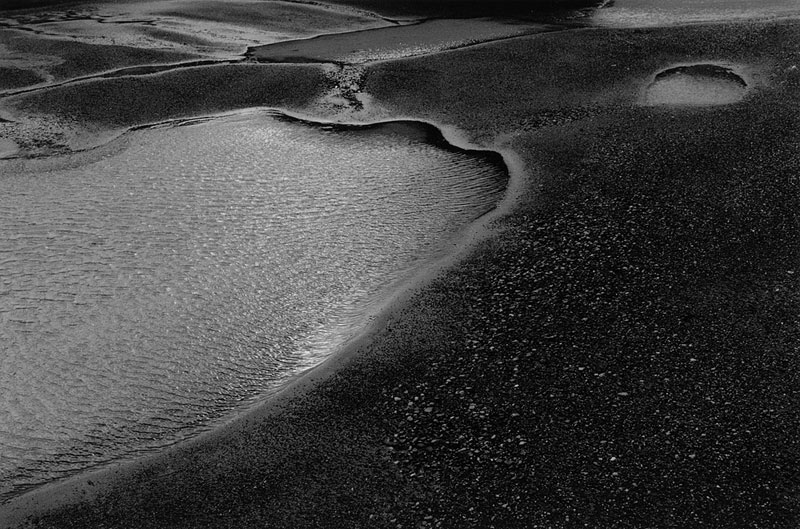
His workshop was a good opportunity for me to think about my own photos, question what it was I wanted to do, what I had been doing up to that point, and what I should be doing going forward, and so on. As a result, I ended up ignoring Onaka-san’s words to “take more pictures of towns”. [laughs] More and more I came to take photographs of simple scenes and places. So, I guess that in doing nothing but the opposite of what he talked about, I was not a good student. [laughs] The series of photographs of the gravel mountains in the latter half of my book [Kadoi Sachiko: Photographs 2003-2008] came from such a background.
Anyway, I was still working very hard to support myself, but I was also becoming crazy about photography. Even when I finished my work at 2 o’clock in the morning, I would then look at my contact sheets for over an hour.
JE: Speaking of your book from Sokyusha, it carries the subtitle “Photographs, 2003-2008”. That makes me think this book is a “collection” of your work from the last 5 years, rather than a single project that took 5 years to photograph. How do you think of this book?
SK: Actually, I want my next book to be a single project. But I wanted to make this book first. However, rather than a collection of individual images taken over the last five years, I think the photographs have been selected and edited together to become something with a unified feel. I feel that Ota Michitaka-san has done a great job taking a number of my projects and shuffling them around. At first I showed him the postscript I had written and conveyed to him my thought process behind the taking of the photos.
[Ota runs the publishing company Sokyusha and has edited and published many important photo books, including the original Ravens by Masahisa Fukase, as well as books by Daido Moriyama, Miyako Ishiguchi, and Onaka. – ed.]
JE: The book does seem to me to be very well edited. What was the working process with Ota?
SK: At first I handed him the photos which I had selected, and about a week later he presented the first draft, and then I gave him my opinion. Every time Ota-san shifted the photos around, I would make a mock-up and he would check the sequencing again. He would suggest what photographs he thought would work the best in the sequencing, and then I would look at the contact sheets again, and print more photos as well. The inclusion in the book of photos from the “gravel mountain” series was a result of this process. We worked on this from the middle of July until October (2008). It was very tough work because of the short time span.
“I don’t think that man and nature are opposing concepts, and therefore I don’t want to take photographs from such a point of view.â€
JE: There are only a few photographs in the book that have any people in them, but on the other hand, it seems that almost everything we seen in the photographs comes from man, is man-made. Can you tell us more about your approach to landscapes and what attracts you to a scene?
SK: Although I am walking around places where I rarely encounter people, I’m thinking that I want to take pictures of people. But this thought to take photos of “man†doesn’t mean that I want to take pictures of, say, the elderly that I sometimes pass by on my walks. Japan is a small country, and because of this we can see a direct relationship between people and nature or the land everywhere we go.  I’m not particularly thinking in a conscious way that “this object has a relationship with man”, but it seems that the scenes in front of me that I want to take are essentially always those kind of scenes. I don’t think that man and nature are opposing concepts, and therefore I don’t want to take photographs from such a point of view. While there is a clamor against environmental destruction nowadays, when I look at the landscapes on islands or sand dunes, etc., I find that man’s existence is small and that I am overwhelmed by the immense power of this other thing, that is nature or what some people might call “Godâ€. The important thing for me is that, as opposed to ruins which are of “the pastâ€, the subjects I want to take photographs of most of all show man’s existence, and are things still in operation.
JE: These are not what many people would consider beautiful places.
SK: Daniel Stifler, who translated the postscript of my book into English, told me that the subjects of my photographs are perhaps not beautiful in a traditional sense, but that he felt I was able to find beauty in them, and that there is both space and silence. I was told similar things by some Japanese people, such as “I like your work because there is a space I can participate in”. I was very happy to hear that.
JE: How often do you photograph? Are you a photographer who is always shooting pictures, or are you a person who works more on a project by project basis?
SK: I think a bit of both, but I don’t have the feeling that I am always taking pictures. But that doesn’t mean that I take pictures by seeking out beforehand potential locations to shoot in, according to some theme or another. I think encountering the landscapes just by walking and walking is important for me. When I’m out shooting, I don’t take photos or not take photos to fit some theme.
JE: Can I ask you about the camera(s) you use and whether or not equipment is important to you?
SK: I shoot in 35mm and sometimes use a Mamiya 645 camera. I think the camera – or rather, the lens – is important, but I am not a camera otaku. My camera is not so bad, but I am thinking I want another one. I received a 6 x 9 format camera last year, so I am looking forward to taking photos with that. It is often said about me that I like to take photos unhurriedly, but I take photos as if I’m taking snapshots, and shoot quickly. I don’t vacillate about composition, and those times when I look through the viewfinder and can’t decide on a composition, I don’t take the photograph. I don’t use a tripod except in dark situations – it seems to change the photograph if I use one. As for film, I used to like XP2, but I use Tmax 400 developed in XTOL now. I process and print my own work at home.
JE: What are you working on now?
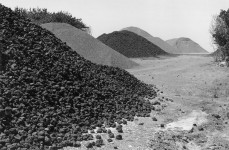
SK: The photographs that are in my new book are several projects that continues now. The series of gravel mountain in particular I want to spend more time continuing to photograph, and would like to publish it sometime in the future. There are lots of different photos I have taken from this series, so I am thinking about what kind of things I can do with those photos for a photo book.
I started taking photographs in parks when I was in Onaka-san’s workshop, and some of these are in the book, but I stopped taking them after that. I would like to pick that back up again. Additionally, as a new experiment, I’m making small prints of photos taken in Tokyo’s old town, which I have at an arts and crafts store called “Fukugawa Ippuku” near the Museum of Contemporary Art Tokyo, and which I add to each month. These will be snapshots taken in the older districts in the eastern part of Tokyo, what we call “shitamachiâ€, around my hometown.
And lastly, it is not landscapes, but I have a project that I have been wanting to do since I began to have exhibitions of my work held. This is still at a trial stage, so I cannot talk a lot about it, but it involves photographing the movement of the body. I don’t know if I can succeed in that project or not. Anyway, I need a lot of time for all these projects!
JE: 最åˆã«å†™çœŸã«èˆˆå‘³ã‚’ã‚‚ã£ãŸã®ã¯ã„ã¤ã§ã™ã‹ï¼Ÿ
SK: 11æ‰ã®ã¨ãã€æ—¥å…‰æž—é–“å¦æ ¡ã«åˆã‚ã›ã¦çˆ¶è¦ªãŒåã©ã‚‚ã®ãŸã‚ã«ãƒãƒ¼ãƒ•ã‚µã‚¤ã‚ºã®ã‚³ãƒ³ãƒ‘クトカメラを買ã£ã¦ãã‚Œã¦ã€åˆã‚ã¦è‡ªåˆ†ã§æ’®ã‚Šã¾ã—ãŸã€‚ä¿®å¦æ—…行や林間å¦æ ¡ã«ã‚«ãƒ¡ãƒ©ã‚’æŒã£ã¦ã„ãã®ã¯æ—¥æœ¬ã§ã¯ä¸€èˆ¬çš„ãªã“ã¨ã§ã™ãŒã€è‡ªåˆ†ã§æ’®ã‚‹ã®ã¯ãŠã‚‚ã—ã‚ãã€ã‚«ãƒ¡ãƒ©ã‚’手ã«ã—ã¦ã†ã‚Œã—ã‹ã£ãŸã®ã‚’覚ãˆã¦ã„ã¾ã™ã€‚æœ¬æ ¼çš„ã«å†™çœŸã‚’始ã‚ãŸã®ã¯ã€å¤§å¦æ™‚代ã«ã‚«ãƒ¡ãƒ©ã‚’è²·ã£ã¦ã‹ã‚‰ã§ã™ã€‚
JE: 多摩美術大å¦ã«é€šã‚ã‚ŒãŸã®ã§ã™ã‚ˆã?
SK: ãã†ã§ã™ã€‚ã‚‚ã¨ã‚‚ã¨ç§ã¯ç¾Žè¡“ã«èˆˆå‘³ãŒã‚ã‚Šã¾ã—ãŸã€‚画家ã ã£ãŸç¥–父ãŒè²·ã£ãŸç¾Žäººç”»ã®ç”»é›†ã‚„ã„ã‚ã„ã‚ãªå±•è¦§ä¼šã®å›³éŒ²ãŒå®¶ã«ã‚ã‚Šã¾ã—ãŸã®ã§ã€ãれらを見ãŸã‚Šã€ã¾ãŸä¸å¦é«˜æ ¡æ™‚代ã¯ç¾Žè¡“館ã«é€šã£ãŸã‚Šã—ã¦ã€å°†æ¥ã¯ç”»å®¶ã«ãªã‚ŠãŸã„ãªã¨æ€ã£ã¦ã„ã¾ã—ãŸã€‚ã§ã‚‚ç§ã®å®¶æ—ã¯å°ã•ãªå®¶ã«ä¸¡è¦ªã¨å§‰ã¨ç§ã¨ç¥–父æ¯ã¨ã§ä½ã‚“ã§ã„ã¦è‡ªåˆ†ã®éƒ¨å±‹ã‚‚ãªã‹ã£ãŸã—ã€ç¾Žè¡“大å¦ã«é€²ã‚€ã®ã‚‚大変ã§ã—ãŸã€‚æ˜ ç”»ã€Žãƒªãƒˆãƒ«ãƒ€ãƒ³ã‚µãƒ¼ã€ã¿ãŸã„ã§ï¼ˆç¬‘)。ãã‚Œã§å’æ¥å¾Œã¯ã¨ã«ã‹ã親ã‹ã‚‰ç‹¬ç«‹ã—ãŸã„ã¨è€ƒãˆã¦ã„ã¦ã€ãã‚“ãªè‡ªåˆ†ã«ã¯ãƒ•ã‚¡ãƒ³ã‚¢ãƒ¼ãƒˆã®ä¸–ç•Œã¯ç”Ÿè¨ˆã‚’ç«‹ã¦ã‚‹ä¸Šã§é›£ã—ãæ€ã„ã¾ã—ãŸã€‚ãã‚Œã§ãƒ‡ã‚¶ã‚¤ãƒ³ç§‘ã«é€²ã‚“ã ã®ã§ã™ãŒã€å…¥ã£ã¦ã¿ãŸã‚‚ã®ã®åºƒå‘Šãƒ‡ã‚¶ã‚¤ãƒ³ã®ä¸–ç•Œã«ã¯é¦´æŸ“ã‚ã¾ã›ã‚“ã§ã—ãŸã€‚
ãŸã 幸ã›ã ã£ãŸã“ã¨ã¯ã€ç¾Žè¡“大å¦ã®ãƒ‡ã‚¶ã‚¤ãƒ³ç§‘やデザインスクールã«ã¯å¿…ãšå†™çœŸã®æŽˆæ¥ãŒã‚ã‚Šã¾ã—ãŸã€‚暗室作æ¥ã«ã¯èˆˆå‘³ãŒã‚ã‚Šã¾ã—ãŸã®ã§ã¨ã¦ã‚‚楽ã—ã¿ã§ã—ãŸã€‚ãã®ã¨ãã«è‡ªåˆ†ã§ã‚ヤノンã®ä¸€çœ¼ãƒ¬ãƒ•ã‚’è²·ã„ã¾ã—ãŸã€‚今ã§ã‚‚使ã£ã¦ã„るカメラã§ã™ã€‚20å¹´æ•…éšœãªã使ã£ã¦ã„ã¾ã™ã€‚
å¦æ ¡ã§ã¯ã€ãƒ¢ãƒŽã‚¯ãƒã®ãƒ—リント技術や調色ã®ä»–ã«ã€ãƒ•ã‚©ãƒˆã‚°ãƒ©ãƒ ã€ã‚½ãƒ©ãƒªã‚¼ãƒ¼ã‚·ãƒ§ãƒ³ãªã©ã„ã‚ã„ã‚ãªã“ã¨ã‚’å°‘ã—ãšã¤å¦ç¿’ã—ã¾ã—ãŸã€‚写真ã¯ä»–ã®ä½œå®¶ã®ä½œå“ã‚’ã¿ã‚‹ã“ã¨ã‚ˆã‚Šã€ã¨ã«ã‹ã撮るã¨ã„ã†ã“ã¨ãŒå¥½ãã§ã€ä»Šã¨æ¯”ã¹ã‚‹ã¨ã€å†™çœŸã‚®ãƒ£ãƒ©ãƒªãƒ¼ã‚’回ã£ãŸã‚Šå†™çœŸé›†ã‚’見ãŸã‚Šã¨ã„ã†ã®ã¯å°‘ãªã‹ã£ãŸã§ã™ã€‚æ—…ãŒå¥½ãã ã£ãŸã®ã§å’æ¥å¾Œã¯å›½å†…外一人ã§è¡Œã£ã¦ã¯è‡ªåˆ†ã®æ¥½ã—ã¿ã®ãŸã‚ã«æ’®ã£ã¦ã„ã¾ã—ãŸã€‚
JE: å’æ¥å¾Œã¯ã©ã†ã•ã‚Œã¦ã„ãŸã®ã§ã™ã‹ï¼Ÿ
SK: å’æ¥å¾Œã¯ãƒ‡ã‚¶ã‚¤ãƒ³äº‹å‹™æ‰€ã«ã¯å‹¤ã‚ãšã«ãƒ•ãƒªãƒ¼ãƒ©ãƒ³ã‚¹ã§æ›¸ç±ã®ä»•äº‹ã‚’ã—ã¾ã—ãŸã€‚ブックデザインã®ä»•äº‹ã§ã™ãŒã€æ§‹æˆã€ç·¨é›†ã€é€ 形物ã®åˆ¶ä½œã‚„ã€ã‚¤ãƒ©ã‚¹ãƒˆãƒ¬ãƒ¼ã‚·ãƒ§ãƒ³ãªã©ã€æœ¬ã«é–¢ã™ã‚‹ã„ã‚ã„ã‚ãªã“ã¨ã‚’ã‚„ã‚Šã¾ã—ãŸã€‚主ã«å¹¼å…ã‹ã‚‰å°å¦ç”Ÿã®èªã‚€è‡ªç„¶ç§‘å¦ã®æœ¬ã‚„ã€ä¿è‚²å£«å‘ã‘ã®å®ŸæŠ€æ›¸ã‚„ä¿è‚²ã‚«ã‚¦ãƒ³ã‚»ãƒªãƒ³ã‚°ã«ã¤ã„ã¦ã®æœ¬ã§ã™ã€‚仕事ã¯æœ¬å½“ã«å¿™ã—ã一年休ã¿ãªãåƒã„ãŸå¹´ã‚‚ã‚ã‚Šã¾ã—ãŸã€‚ãã®é–“ã‚‚ã€ä½œå“を作りãŸã„ã€ã“ã‚Œã¯å†™çœŸã§ã¯ãªãドãƒãƒ¼ã‚¤ãƒ³ã‚°ã‚„ペインティングã§ã™ãŒã€ãã®æ°—æŒã¡ã¯ãšã£ã¨å¤‰ã‚らãšæŒã¡ç¶šã‘ã¦ã„ãŸã®ã§ã™ãŒã€å¿™ã—ã„毎日ã§ãªã‹ãªã‹ã§ãã¾ã›ã‚“ã§ã—ãŸã€‚
JE: 写真を表ç¾æ‰‹æ®µã¨ã—ã¦è€ƒãˆå§‹ã‚ãŸã®ã¯ã„ã¤ã§ã™ã‹ã€‚
SK: スタジオ撮影や野外ã®æ’®å½±ã®ä»•äº‹ã‚‚ã‚ã‚Šã¾ã—ãŸã—ã€ä¸»ã«è‡ªç„¶ç§‘å¦ã®æœ¬ã«ä½¿ã‚れる写真ã®ã‚¹ãƒˆãƒƒã‚¯ã‚’ã—ã¦ã„る編集事務所ã§ç·¨é›†ã®å‹‰å¼·ã‚’ã•ã›ã¦ã„ãŸã ã„ãŸã®ã§ã€ã„ã¤ã‚‚写真ã¨éš£ã‚Šåˆã‚ã›ã®ä»•äº‹ã§ã¯ã‚ã‚Šã¾ã—ãŸã€‚ã§ã‚‚表ç¾æ‰‹æ®µã¨ã—ã¦è€ƒãˆå§‹ã‚ãŸã®ã¯2003å¹´ã«å°¾ä»²ã•ã‚“ã®ãƒ¯ãƒ¼ã‚¯ã‚·ãƒ§ãƒƒãƒ—ã«é€šã£ã¦ã‹ã‚‰ã§ã™ã€‚
JE: ワークショップã«é€šã‚ã‚ŒãŸã®ã¯ã©ã†ã„ã†ãã£ã‹ã‘ã§ã™ã‹ï¼Ÿ
SK: 2003å¹´ã¯ç§ã«ã¨ã£ã¦ã€ã‚¿ãƒ¼ãƒ‹ãƒ³ã‚°ãƒã‚¤ãƒ³ãƒˆã¨ãªã‚‹ã§ãã”ã¨ãŒãŸãã•ã‚“ã‚ã‚Šã¾ã—ãŸã€‚マイケル・ケンナã•ã‚“ã®å€‹å±•ãŒã‚ã‚Šã€ã”本人ã®ã‚¹ãƒ©ã‚¤ãƒ‰ãƒˆãƒ¼ã‚¯ãŒã‚ã‚Šã¾ã—ãŸã€‚ãã®ãªã‹ã§ã€ã‚±ãƒ³ãƒŠã•ã‚“㌠“Ratcliffe Power Stationâ€ã®å†™çœŸã®ã²ã¨ã¤ã«8時間露光ã—ãŸã¨èžãã€ã‚‚ã¡ã‚ん長時間露光ã®å†™çœŸã¨ã¯ã‚ã‹ã£ã¦ã¯ã„ã¾ã—ãŸãŒ8時間ã¨ã„ã†ã®ã«å¤§å¤‰é©šãã¾ã—ãŸã€‚(ãã®ã‚·ãƒªãƒ¼ã‚ºã®ä¸ã§é–€äº•ã•ã‚“ã¯ã€ŒStudy 31ã€ã‚’記憶ã—ã¦ã„る。ï¼ã€€ç·¨é›†è€…談) スライドトークãŒçµ‚ã‚ã£ãŸã‚ã¨å†ã³ãã®å†™çœŸã‚’ã€ãã“ã«8時間ã®æ™‚é–“ãŒå†™ã£ã¦ã„ã‚‹ã®ã ã¨ã€å¤œã®é™å¯‚ã«ç™ºé›»æ‰€ã«å‘ã‹ã£ã¦ã„るカメラをæ€ã„æµ®ã‹ã¹ãªãŒã‚‰è¦‹ã¦ã„ã‚‹ã†ã¡ã«ã€ã“ã‚“ãªæ€ã„ãŒæµ®ã‹ã³ã¾ã—ãŸã€‚
写真ã¯ã€ç§ãŒè¦‹ã¦ã„る時間ã€ç§ã®å‰ã«æµã‚Œã¦ã„る時空をカメラãŒåˆ‡ã‚Šå–ã‚‹ã®ã§ã¯ãªãã¦ã€ã‚«ãƒ¡ãƒ©ãŒè¦‹ã¤ã‚ã¦ã„ã‚‹ã€ã‚«ãƒ¡ãƒ©ã®å‰ã«æµã‚Œã¦ã„る時空をç§ãŒåˆ‡ã‚Šå–ã‚‹ã‚‚ã®ãªã®ã§ã¯ãªã„ã®ã‹ã€ã¨ã„ã†ã“ã¨ã§ã™ã€‚ãã®çž¬é–“ã€ã‚ã‚写真ãŒæ’®ã‚ŠãŸã„ã€ã¨å¼·ãæ€ã„ã¾ã—ãŸã€‚20年撮り続ã‘ã¦ã„ãŸã®ã«ãªãœã‹ãã†æ€ã£ãŸã®ã§ã™ã€‚
ã¾ãŸãã®å¤ã«å°¾ä»²æµ©äºŒã•ã‚“ã®ãƒ¯ãƒ¼ã‚¯ã‚·ãƒ§ãƒƒãƒ—ãŒæ¨ªæµœã§ã‚ã‚Šå‚åŠ ã—ã¾ã—ãŸã€‚尾仲ã•ã‚“ã«ã¤ã„ã¦ã¯ã€10年程å‰ã€å†™çœŸã®å¥½ããªå‹äººãŒå°¾ä»²ã•ã‚“ã®å€‹å±•ã«èª˜ã£ã¦ãã‚Œã¾ã—ãŸã€‚ç§ãŒæ—…好ãã§ã€ä¸€äººã§ã„ã‚ã„ã‚ãªã¨ã“ã‚ã¸è¡Œã£ã¦å†™çœŸã‚’æ’®ã£ã¦ãã‚‹ã®ã‚’知ã£ã¦ã„ã¦ã€å‚考ã«ãªã‚‹ã ã‚ã†ã¨æ€ã£ãŸã®ã‹ã‚‚ã—ã‚Œã¾ã›ã‚“。ã¾ã ãƒãƒ¼ãƒ«ç´™ã§å¤§ããプリントã—ã¦ã„ãŸå°¾ä»²ã•ã‚“ã®ä½œå“ã‚’æµæ¯”寿ã§è¦‹ãŸã®ã‚’覚ãˆã¦ã„ã¾ã™ã€‚
JE: 尾仲ã•ã‚“ã®ãƒ¯ãƒ¼ã‚¯ã‚·ãƒ§ãƒƒãƒ—ã«ã¤ã„ã¦ã‚‚ã†å°‘ã—æ•™ãˆã¦ãã ã•ã„。
SK: 尾仲ã•ã‚“ã®ãƒ¯ãƒ¼ã‚¯ã‚·ãƒ§ãƒƒãƒ—ã§å¾—ãŸã‚‚ã®ã®ï¼‘番ã¯ã€ä½œå“を発表ã—ã¦ã„ã“ã†ã¨ã„ã†æ„æ€ã‚’ã‚‚ã¦ãŸã¨ã„ã†ã“ã¨ã ã¨æ€ã„ã¾ã™ã€‚美術ã«å¯¾ã™ã‚‹æ€ã„ãŒå¼·ã‹ã£ãŸã ã‘ã§ãªãã€ä»•äº‹ã‚’通ã˜ã¦ã€å†™çœŸå®¶ã¨å‘¼ã°ã‚Œã‚‹äººã¯ã‚³ãƒžãƒ¼ã‚·ãƒ£ãƒ«ã®ä»•äº‹ã‚’ã—ã¦ã„ã‚‹ã¨æ€ã£ã¦ã„ãŸã®ã§ã€è‡ªåˆ†ã®å†™çœŸã‚’作å“ã¨ã—ã¦ç™ºè¡¨ã™ã‚‹ã¨ã„ã†è€ƒãˆã‚’æ€ã„ã¤ãã¾ã›ã‚“ã§ã—ãŸã€‚
尾仲ã•ã‚“ã¯ã€å†™çœŸã®æ™‚代性や写真ã«å†™ã‚Šè¾¼ã‚€ã‚‚ã®ã®é¢ç™½ã•ã¨ã„ã†ã“ã¨ã‚’話ã•ã‚Œã¾ã—ãŸã€‚時代性ã“ããŒå†™çœŸã®åŠ›ã§ã‚ã‚‹ã¨ã€‚ã ã‹ã‚‰å¤–国ã«è¡Œã£ã¦å†™çœŸã‚’撮るã“ã¨ã«ã¯å½“時ã¯å¦å®šçš„ã§ã—ãŸã€‚
ã¾ãŸã€ã‚ャラクター性ã®å¼·ã„(ãŠã‚‚ã—ã‚ã„ã‚‚ã®ï¼‰ã‚’撮るã¨ã„ã†ã“ã¨ã«å¯¾ã—ã¦ã€ã€ŒãŠã‚‚ã‚ã„ã‚‚ã®ã€ã‚’ç´ ç›´ã«ãŠã‚‚ã—ã‚ã„ã¨æ€ã£ã¦æ’®ã‚‹ã“ã¨ã®å¤§åˆ‡ã•ã‚‚話ã•ã‚Œã¦ã„ã¾ã—ãŸã€‚ãŸã ãã‚Œã«ã¯å°¾ä»²ã•ã‚“ã®æ–¹æ³•è«–ãŒã‚ã‚Šã€ã¾ãŸãã‚ŒãŒå°¾ä»²ã•ã‚“ã®å†™çœŸã®è‰¯ã•ã§ã‚ã‚Šã€ãれ通りã«ã—ã¦ã„ã‚Œã°ã„ã¤ã—ã‹ä¼¼ãŸã‚ˆã†ãªä½œå“ã«ãªã£ã¦ã—ã¾ã†ã€‚
尾仲ã•ã‚“ã®ãƒ¯ãƒ¼ã‚¯ã‚·ãƒ§ãƒƒãƒ—ã«è¡Œãã“ã¨ã§ã€è‡ªåˆ†ã®å†™çœŸã®ã“ã¨ã€ã‚„ã‚ŠãŸã„ã“ã¨ã€ä»Šã—ã¦ã„ã‚‹ã“ã¨ã€ã“ã‚Œã‹ã‚‰ã™ã‚‹ã¹ãã“ã¨ã€ãªã©ã‚’æ·±ã考るã“ã¨ã«ãªã£ãŸã®ãŒã‚ˆã‹ã£ãŸã¨æ€ã„ã¾ã™ã€‚çµæžœçš„ã«ã¯ç§ã¯ã€Œè¡—を撮りãªã•ã„ã€ã¨ã„ã†è¨€è‘‰ã‚‚無視ã—ã¦ï¼ˆç¬‘)ã¾ã™ã¾ã™æ™‚代性ã®ã§ãªã„状æ³ã‚„ã€å†™ã‚Šè¾¼ã‚€ã‚‚ã®ã®ãŠã‚‚ã—ã‚ã•ã‚’極力é¿ã‘ãŸã‚ˆã†ãªå†™çœŸã‚’æ’®ã£ã¦è¡Œãよã†ã«ãªã‚Šã¾ã—ãŸã€‚å抗ã°ã‹ã‚Šã—ã¦ã„ã¦ãã£ã¨ã‚ˆã„生徒ã§ã¯ãªã‹ã£ãŸã¨æ€ã„ã¾ã™ï¼ˆç¬‘)。写真集ã®å¾ŒåŠã«å…¥ã£ã¦ã„ã‚‹ç ‚åˆ©å±±ã®ã‚·ãƒªãƒ¼ã‚ºã¯ã“ã†ã—ãŸèƒŒæ™¯ã‹ã‚‰ã§ã¦ããŸã‚‚ã®ã§ã™ã€‚仕事ã¯ç›¸å¤‰ã‚らãšå¿™ã—ã‹ã£ãŸã‘ã‚Œã©ã€å†™çœŸã«å¤¢ä¸ã§ã—ãŸã€‚夜ä¸ã®äºŒæ™‚ã«ä»•äº‹ã‚’終ãˆãŸã¨ãã§ã‚‚ã€ãã‚Œã‹ã‚‰ä¸€æ™‚間コンタクトを見ãŸã‚Šã—ã¾ã—ãŸã€‚
JE: 蒼穹舎ã‹ã‚‰å‡ºã•ã‚ŒãŸæœ¬ã«ã¤ã„ã¦ã€”Photographs, 2003-2008″ã¨å‰¯é¡Œã«ã€ã²ã¨ã¤ã®ãƒ—ãƒã‚¸ã‚§ã‚¯ãƒˆã«ã‚ˆã‚‹å†™çœŸé›†ã¨ã„ã†ã‚ˆã‚Šã€5å¹´é–“ã®ä½œå“集ã¨å°è±¡ã‚’å—ã‘ã¾ã—ãŸãŒã€ãã®ã¸ã‚“ã«ã¤ã„ã¦èžã‹ã›ã¦ä¸‹ã•ã„。
SK: ã“ã®æ¬¡ã¯ã²ã¨ã¤ã®ãƒ—ãƒã‚¸ã‚§ã‚¯ãƒˆã§æœ¬ã‚’作りãŸã„ã¨è€ƒãˆã¦ã„ã¦ã€ãã®å‰ã«ã“れを作ã£ã¦ãŠããŸã‹ã£ãŸã¨ã„ã†ã®ãŒã‚ã‚Šã¾ã—ãŸã€‚ãŸã ãã‚Œãžã‚ŒãŒç‹¬ç«‹ã—ãŸã‚¤ãƒ¡ãƒ¼ã‚¸ã®ä½œå“集ã§ã¯ãªãã€æœ¬ã¨ã—ã¦çµ±ä¸€ã•ã‚ŒãŸã‚‚ã®ã«ãªã‚‹ã‚ˆã†ã«å†™çœŸã¯çµžã‚‰ã‚Œã¦ç·¨é›†ã•ã‚Œã¦ã„ã‚‹ã¨æ€ã„ã¾ã™ã€‚編集ã®å¤§ç”°é€šè²´ã•ã‚“ã¯ã€ã„ãã¤ã‚‚ã®ç§ã®ãƒ—ãƒã‚¸ã‚§ã‚¯ãƒˆã‚’シャッフルã—ãªãŒã‚‰ã€ã†ã¾ãã¾ã¨ã‚ã¦ãã ã•ã£ãŸã¨æ„Ÿã˜ã¦ã„ã¾ã™ã€‚大田ã•ã‚“ã«ã¯ã€å¾Œä»˜ã‘ã®æ–‡ç« ã‚’å…ˆã«æ¸¡ã—ã¦ã€ã©ã†ã„ã†æ€ã„ã§æ’®ã£ã¦ã„ã‚‹ã®ã‹ã‚’ä¼ãˆã¾ã—ãŸã€‚
JE: ã¨ã¦ã‚‚よã„編集ãŒã•ã‚Œã¦ã„ã‚‹ã¨æ€ã„ã¾ã™ã€‚大田ã•ã‚“ã¨ã®ç·¨é›†ãƒ—ãƒã‚»ã‚¹ã‚’èžã‹ã›ã¦ãã ã•ã„。
SK: ã¾ãšã¯å¤§ç”°ã•ã‚“ã«ã‚»ãƒ¬ã‚¯ãƒˆã—ãŸå†™çœŸã‚’渡ã—ã€ä¸€é€±é–“後ã«ã„ãŸã ã„ãŸæ¡ˆã«ä»Šåº¦ã¯ç§ãŒæ„見を出ã—ã¾ã—ãŸã€‚写真ãŒå…¥ã‚Œæ›¿ã‚ã‚‹ãŸã³ã«ç§ãŒå°ã•ã„完æˆè¦‹æœ¬ã‚’作りã€å¤§ç”°ã•ã‚“ãŒå†åº¦æµã‚Œã‚’ãƒã‚§ãƒƒã‚¯ã—ã¾ã—ãŸã€‚æµã‚Œã®ãªã‹ã§ãã“ã«ã©ã‚“ãªå†™çœŸãã‚‹ã¨ã‚ˆã‚Šè‰¯ã„ã®ã‹ã‚’èžãã€ã‚³ãƒ³ã‚¿ã‚¯ãƒˆã‹ã‚‰è¦‹ç›´ã—プリントを繰り返ã—ãŸã¨ã“ã‚ã‚‚ã‚ã‚Šã¾ã—ãŸã€‚ç ‚åˆ©å±±ã®ã‚ãŸã‚ŠãŒãã†ã§ã™ã€‚2008å¹´ã®7月ã®ä¸æ—¬ã‹ã‚‰10月ã¾ã§ã®ä½œæ¥ã§ã—ãŸã€‚期間ã¨ã—ã¦ã¯çŸã‹ã£ãŸã®ã§å¤§å¤‰ãã¤ã„作æ¥ã§ã‚‚ã‚ã‚Šã¾ã—ãŸã€‚
JE:人ã®å†™ã£ã¦ã„る写真ã¯ã»ã¨ã‚“ã©ã‚ã‚Šã¾ã›ã‚“ãŒã€ä¸€æ–¹ã§ã€ã€Œäººã«ã‚ˆã‚Šä½œã‚‰ã‚ŒãŸé¢¨æ™¯ã€ã§ã‚ã‚‹ã¨æ„Ÿã˜ã‚‰ã‚Œã¾ã™ã€‚風景ã«å¯¾ã™ã‚‹ã‚¢ãƒ—ãƒãƒ¼ãƒã‚„ã€å¼•ãã¤ã‘られる風景ã„ã«ã¤ã„ã¦æ•™ãˆã¦ãã ã•ã„。
SK: ã‚‚ã¨ã‚‚ã¨æ©ã„ã¦ã„ã¦ã‚‚ã‚ã£ãŸã«äººã«ä¼šã‚ãªã„å ´æ‰€ãªã®ã§ã™ãŒã€ã€Œäººã‚’撮りãŸã„ã€ã¨æ€ã£ã¦ã„ã‚‹ã®ã§ã™ã€‚ã§ã‚‚ãã®ã€Œäººã‚’撮りãŸã„ã€ã¨æ€ã†ç§ã®æ€ã„ã¯ã€ä¾‹ãˆã°ãŸã¾ã«ã™ã‚Œé•ã†ãŠå¹´å¯„りを撮るã¨ã„ã†ã®ã¨ã¯é•ã†ã‚‚ã®ã§ã‚ã‚‹ã¨è€ƒãˆã¦ã„ã¾ã™ã€‚日本ã¯å›½åœŸãŒç‹ã„ã®ã§ã€ã©ã“ã¸è¡Œã£ã¦ã‚‚人ã¨è‡ªç„¶ï¼ˆåœŸåœ°ï¼‰ã¨ã®é–¢ã‚ã‚ŠãŒè¦‹ã‚‰ã‚Œã¾ã™ã€‚特ã«æ„è˜ã—ã¦ã€Œã“ã†ã„ã†ã‚‚ã®ã¯äººã¨ã®é–¢ã‚ã‚Šã ã€ã¨è€ƒãˆã¦æ’®ã‚‹ã“ã¨ã¯ã‚ã‚Šã¾ã›ã‚“ãŒã€æ’®ã‚ŠãŸã„ãªã¨æ€ã†ç›®ã®å‰ã®é¢¨æ™¯ãŒãã‚‚ãã‚‚ã©ã‚Œã‚‚ãã‚“ãªæ„Ÿã˜ã«ç§ã«ã¯æ€ãˆã¾ã™ã€‚人ã¨è‡ªç„¶ã¯ç›¸å¯¾ç«‹ã™ã‚‹ã‚‚ã®ã§ã§ã¯ãªã„ã¨è€ƒãˆã¦ã„ã¾ã™ã®ã§ã€ãã†ã„ã†è¦–点ã§æ’®ã‚ŠãŸãã¯ã‚ã‚Šã¾ã›ã‚“ã€‚ç’°å¢ƒç ´å£ŠãŒå«ã°ã‚Œã¦ã„る昨今ã§ã™ãŒã€ã‚€ã—ã‚å³¶ã‚„ç ‚ä¸˜ãªã©ã§è¦‹ã‚‹é¢¨æ™¯ã«ã¯ã€äººã¯æœ¬å½“å°ã•ããれ以外ã®åŠ›ã€è‡ªç„¶ã¨ã„ã†ã‹ãれ以上ã®ã€ã€Œç¥žã€ã¨å‘¼ã¶äººã‚‚ã„ã‚‹ã§ã—ょã†ãŒã€ãã®å¤§ãã•ã«åœ§å€’ã•ã‚Œã‚‹ã“ã¨ãŒã‚ã‚Šã¾ã™ã€‚é‡è¦ãªã“ã¨ã¯ã€äººã®å˜åœ¨ã¨ã„ã£ã¦ã‚‚ã€å»ƒå¢Ÿã®ã‚ˆã†ã«”ã‹ã¤ã¦”ã‚‚ã®ã§ã¯ãªãã€ç¾åœ¨ç¨¼åƒã—ã¦ã„ã‚‹ã‚‚ã®ã‚’撮りãŸã„ã®ã§ã™ã€‚
JE: 多ãã®äººã€…ãŒã‚ã¾ã‚Šãã‚Œã„ãªå ´æ‰€ã¨æ€ã‚ãªã„ã§ã—ょã†ã€‚
SK: 翻訳ã—ã¦ãã‚ŒãŸãƒ€ãƒ‹ã‚¨ãƒ«ãƒ»ã‚¹ãƒ†ã‚£ãƒ•ãƒ©ãƒ¼ã•ã‚“ã«ã¯ã€ç§ã¯ä¼çµ±çš„ãªæ„味ã§ç¾Žã—ã„ã‚‚ã®ã¯æ’®ã£ã¦ã¯ã„ãªã„ãŒã€ã©ã‚“ãªã‚‚ã®ã«ã‚‚美を見ã„ã ã—ã¦ã„ã‚‹ã¨è¨€ã‚ã‚Œã¾ã—ãŸã€‚ãã‚Œã‹ã‚‰ç§ã®å†™çœŸã«ã¯ç©ºé–“ã¨é™å¯‚ãŒã‚ã‚‹ã¨ã‚‚。似ãŸã‚ˆã†ãªã“ã¨ã‚’ç§ã®å†™çœŸã‚’好ãã ã¨ã„ã£ã¦ãã ã•ã‚‹æ—¥æœ¬ã®æ–¹ã«ã‚‚言ã‚ã‚ŒãŸã“ã¨ãŒã‚ã‚Šã¾ã™ã€‚「見るç§ã®å±…å ´æ‰€ãŒã‚ã‚‹ã€ã¨ã€‚ãれらをèžã„ãŸã¨ãã¨ã¦ã‚‚ã†ã‚Œã—ãæ€ã„ã¾ã—ãŸã€‚
JE: ã©ã®ãらã„ã®é »åº¦ã§æ’®ã‚‹ã®ã§ã™ã‹ï¼Ÿã„ã¤ã‚‚æ’®ã£ã¦ã„るタイプã®å†™çœŸå®¶ã§ã—ょã†ã‹ï¼Ÿãã‚Œã¨ã‚‚プãƒã‚¸ã‚§ã‚¯ãƒˆã‚’基本ã«ã—ã¦æ’®ã£ã¦ã„ã‚‹æ–¹ã§ã—ょã†ã‹ï¼Ÿ
SK: ã©ã¡ã‚‰ã‚‚ã¨æ€ã„ã¾ã™ãŒâ€¦ã€ã‚ã¾ã‚Šã„ã¤ã‚‚ã„ã¤ã‚‚æ’®ã£ã¦ã„ã‚‹ã¨ã„ã†æ„Ÿã˜ã§ã¯ã‚ã‚Šã¾ã›ã‚“。ã§ã‚‚テーマã«æ²¿ã£ã¦ã€è¢«å†™ä½“ã®ã‚るよã†ãªã¨ã“ã‚ã‚’ã‚らã‹ã˜ã‚調ã¹ã€æ’®ã‚Šã«è¡Œãã¨ã„ã†ã“ã¨ã§ã¯ãªãã€ã‚ãã¾ã§æ©ã„ã¦æ©ã„ã¦é¢¨æ™¯ã«å‡ºåˆã†ã“ã¨ã‚’大切ã«è€ƒãˆã¦ã„ã¾ã™ã€‚撮るã¨ãã«ã€ãƒ†ãƒ¼ãƒžã«æ²¿ã£ã¦æ’®ã£ãŸã‚Šæ’®ã‚‰ãªã‹ã£ãŸã‚Šã‚‚ãªã„ã§ã™ã€‚
JE: ãŠä½¿ã„ã®ã‚«ãƒ¡ãƒ©ã‚„è¨å‚™ã«ã¤ã„ã¦èžã‹ã›ã¦ãã ã•ã„。
SK: 35ミリã¨ã€ãã®ä»–ã«ã¯ãƒžãƒŸãƒ¤ã®645ã®ã‚«ãƒ¡ãƒ©ã‚’æŒã£ã¦ã„ã¦ã€æ™‚々ã¯ãã‚Œã§æ’®ã‚Šã¾ã™ã€‚カメラ(ã¨ã„ã†ã‹ãƒ¬ãƒ³ã‚ºï¼‰ã¯å¤§åˆ‡ã ã¨æ€ã„ã¾ã™ãŒã€â€ã‚«ãƒ¡ãƒ©ã‚ªã‚¿ã‚¯â€ã§ã¯ã‚ã‚Šã¾ã›ã‚“。ç§ã®ã‚«ãƒ¡ãƒ©ã¯æ‚ªãã¯ã‚ã‚Šã¾ã›ã‚“ãŒã€ã¾ãŸé•ã†ã‚«ãƒ¡ãƒ©ã‚‚欲ã—ã„ãªã¨ã¯æ€ã£ã¦ã„ã¾ã™ã€‚昨年69ã®ã‚«ãƒ¡ãƒ©ã‚’もらã„ã¾ã—ãŸã€‚今ã¯ãã‚Œã§æ’®ã‚‹ã®ã‚’楽ã—ã¿ã«ã—ã¦ã„ã¾ã™ã€‚よã人ã‹ã‚‰ã€Œã‚†ã£ãり構ãˆã¦æ’®ã£ã¦ã„るよã†ã ã€ã¨è¨€ã‚ã‚Œã¾ã™ãŒã€ã‚¹ãƒŠãƒƒãƒ—ショットã®ã‚ˆã†ãªæ„Ÿè¦šã§æ’®ã£ã¦ã„ã¦ã€æ’®ã‚‹ã®ã¯é€Ÿã„ã§ã™ã€‚構図ã«è¿·ã†ã“ã¨ã‚‚ãªãã€ãƒ•ã‚¡ã‚¤ãƒ³ãƒ€ãƒ¼ã‚’ã®ãžããªãŒã‚‰æ§‹å›³ã‚’è¿·ã†ã¨ãã¯æ’®ã‚‹ã®ã‚’ã‚„ã‚ã¦ã—ã¾ã„ã¾ã™ã€‚æš—ã„時間以外ã¯ä¸‰è„šã‚‚使ã„ã¾ã›ã‚“。三脚を使ã†ã¨å†™çœŸãŒå¤‰ã‚ã£ã¦ã—ã¾ã†ã‚ˆã†ã«æ€ã„ã¾ã™ã€‚フィルムã«ã¤ã„ã¦ã¯XP2ãŒæ°—ã«å…¥ã£ã¦ã„ãŸã®ã§ã™ãŒã€ä»Šã¯Tmax 400を使ã„エクストールã§ç¾åƒã—ã¦ã„ã¾ã™ã€‚自分ã®å®¶ã§ç¾åƒã‚‚プリントもã—ã¦ã„ã¾ã™ã€‚
JE: ã“ã‚Œã‹ã‚‰ã®äºˆå®šã«ã¤ã„ã¦èžã‹ã›ã¦ãã ã•ã„。
SK: 写真集ã«åŽã‚られãŸå†™çœŸã¯ã»ã¨ã‚“ã©ãŒã„ãã¤ã‹ã®ç¶™ç¶šã—ã¦ã„るプãƒã‚¸ã‚§ã‚¯ãƒˆã§ã™ã€‚特ã«ç ‚利山ã¯ã¾ã ã¾ã 時間をã‹ã‘ã¦æ’®ã‚Šç¶šã‘ã€è¿‘ã„å°†æ¥ã¾ã¨ã‚ãŸã„ã¨è€ƒãˆã¦ã„ã¾ã™ã€‚ã„ã‚ã‚“ãªå†™çœŸãŒã‚ã‚Šã¾ã™ã®ã§ã€å†™çœŸé›†ã§ã©ã‚“ãªã“ã¨ãŒã§ãã‚‹ã®ã‹è€ƒãˆã¦é€²ã‚ã¦ã„ããŸã„ã¨è€ƒãˆã¦ã„ã¾ã™ã€‚
ã¾ãŸå°¾ä»²ã•ã‚“ã®ãƒ¯ãƒ¼ã‚¯ã‚·ãƒ§ãƒƒãƒ—ã®ã¨ãã«æ’®ã‚Šå§‹ã‚ãŸå…¬åœ’ã®å†™çœŸã§ã™ãŒã€ã„ãã¤ã‹ã¯å†™çœŸé›†ã«åŽã‚られã¦ã„ã¾ã™ãŒã€ãã®å¾Œã—ã°ã‚‰ãæ’®ã£ã¦ãªã‹ã£ãŸã‚‚ã®ã§ã€ã¾ãŸç¶šã‘ãŸã„ã¨è€ƒãˆã¦ã„ã¾ã™ã€‚
ã‚ã¨ã“ã‚Œã¯æ–°ã—ã„試ã¿ã§ã€æ±äº¬ã®ã‚¹ãƒŠãƒƒãƒ—ã‚’å°ã•ã„プリントã«ã—ã¾ã™ã€‚”æ·±å·ã„
ã£ã·ã”ã¨ã„ã†æ±äº¬ç¾ä»£ç¾Žè¡“館ã®è¿‘ãã«ã‚るショップã«ç½®ã‹ã‚Œã‚‹ã‚‚ã®ã§ã™ã€‚毎月
æ–°ã—ã„写真を置ã予定ã§ã™ã€‚下町ã¨å‘¼ã°ã‚Œã‚‹æ±äº¬æ±éƒ¨åœ°åŒºã§ã®ã‚¹ãƒŠãƒƒãƒ—ã§ã€ç§ã®
生ã¾ã‚ŒãŸã¨ã“ã‚ã§ã‚‚ã‚ã‚Šã¾ã™ã€‚
ã¾ãŸé¢¨æ™¯ã§ã¯ã‚ã‚Šã¾ã›ã‚“ãŒã€ã²ã¨ã¤å†™çœŸã‚’発表ã—始ã‚ãŸã“ã‚ã‹ã‚‰ã‚„ã‚ŠãŸã„ã¨æ€ã£ã¦ã„ã‚‹ã“ã¨ãŒã‚ã‚Šã¾ã™ã€‚ã“ã‚Œã¯ã¾ã 試作段階ãªã®ã§ã‚ã¾ã‚ŠãŠè©±ã§ããªã„ã®ã§ã™ãŒã€ä½“ã®å‹•ãを撮るã¨ã„ã†ã‚ˆã†ãªã‚‚ã®ã§ã€ã†ã¾ãã„ãã‹æœªçŸ¥æ•°ã§ã™ã€‚ã„ãšã‚Œã«ã—ã¦ã‚‚時間ãŒå¿…è¦ã ã¨æ€ã„ã¾ã™ã€‚
 We now have in stock copies of the exhibition catalog for Toshio Shibata’s Landscape retrospective at The Tokyo Metropolitan Museum of Photography, which sadly ends this week.