While the adapter is not fully rangefinder coupled, it will facilitate focussing much more than any other adapter. It will set the camera’s rangefinder to a fixed distance of three meters. You will not be able to focus variably by means of the rangefinder patch, but the 3m setting and usual distance scale-based focussing should help a great deal.
Recommended for lenses up to 50mm focal length. Price ¥18.900.
The following lens mounts are available:
Nikon F
Contax/Yashica
Pentax K
Olympus OM
Leica R
Minolta MD
Exakta/Topcor
M42 (Price ¥13.900)
As usual MADE IN JAPAN quality. Rayqual mount adapters consistently get positive feedback from our customers. Here is a recent comment: This is one well-built little adapter. No rotational slop, very solid; it’s very smooth mounting the lens. Glad I didn’t try the cheapos from eBay… (Texas, USA, on the Rayqual C/Y to EOS adapter)
When you hear the term photo magazine, it is difficult to not immediately jump onto the association of a colorful, glossy and above all, camera- and ad-guzzling publication we are all too familiar with. However, when Atsushi Fujiwara, photographer, photo studio manager and publisher of Asphalt contacted us to present the photo magazine he is publishing, I was very pleasantly surprised.
Fujiwara left behind a successful career and sold off a chain of restaurants he had started up, to venture into the world of photography by opening a hire photo studio catering for high end advertising and commercial photography clients. Since he has no formal background in photography, he has the benefit of an open mind when looking at other photographers. Looking at the commercial work going on in the studio on a daily basis, he started wondering about what else photography could be other than depicting a carefully arranged world in front of the camera for commercial purposes.
One night, he went to Golden Gai in Shinjuku [a famous stretch of small bars and restaurants that started life as a black market area in the period immediately following World War II, and the remnants of 60-year-old barracks can still be found among the bars on the street — Ed.]. In the bar kodoji, a legendary bohemian hangout in the 1960s for photographers like Daido Moriyama and Nobuyoshi Araki, he met by chance Shin-ichiro Tojimbara. Tojimbara graduated from Tokyo Visual Art College as a student of Moriyama and was “tasked” by his former teacher to “take over the next generation of photographers”. Tojimbara was keen to establish a forum or platform for upcoming photographers in Japan, but due to several factors, not least a mental illness with occasional fits, was looking for collaborators. The two connected instantly and decided to found a photography magazine — this was the birth of Asphalt. The pair approached two other photographers as contributors and started working on issue #1.
— Hasegawa, Fujiwara (left to right)
Then another acquaintance of Tojimbara entered the scene: photo editor Akira Hasegawa, who had just retired, was asked spontaneously whether he would be interested in editing the magazine. To Tojimabara’s and Fujiwara’s surprise, he agreed.
The Asphalt team hoped that a famous editor would be helpful in pulling in some of the big names of Japanese photography, but that was the last thing on Hasegawa’s mind. He was more interested in finding quality “no-names” instead, as well as provide a stronger direction on the selection and presentation of new photography.
“The Asphalt concept will be exhausted eventually and there is no need to carry it forward indefinitely.â€
While Asphalt’s early concept was simply to bring together their own material and that of other photographers they know and to produce more a photo book than a magazine to the best of their editorial and commercial ability, upon Hasegawa’s joining from issue #2 the concept of two regulars, one guest was introduced. Hasegawa was also eager to expand the cultural horizon, which meant looking at emerging photography outside of Japan such as from China and Korea. His main motivation is to provide an improved view onto the Japanese and Asian photographic landscape and give guidance to the next generation of photographers. Asphalt was his vehicle of choice to pursue his objective.
Hasegawa has been working to reach an international audience for Japanese and Asian photography for almost 50 years. During its heyday, he was working with ShÅji Yamagishi at Camera Mainichi, the most influential monthly photography magazine in post-war Japan. Even though much of the editorial content of Camera Mainichi was devoted to the usual news and reviews of cameras, lenses, and other equipment, from the start it was a space for first-rate and unconventional photography and this editorial work was perfected under Yamagishi. Yamagishi was a friend of John Szarkowski, the director of the photography division at the Museum of Modern Art in New York, at a time when not a single person outside of Japan seemed to know anything about Japanese photography. In close collaboration they worked to mount two milestone exhibitions in New York, “New Japanese Photography” (Museum of Modern Art, 1974) and “Japan, a Self-Portrait” (International Center of Photography, 1979). As ground-breaking as Szarkowski’s pioneer work has been, Hasegawa believes that it still has not led to a full understanding of Japanese photography in the West.
This may come as a surprise to some of you, but if you think sceneries in Paris back in the early 20th century look beautiful and sceneries in Tokyo in early 21st century look ugly, then you have no idea what photography is all about. Photographs capture reality before anything else. As long as we live in cities such as this one, taking your eyes off of its scenery is just another attempt to drift away from what is real.
— Akira Hasegawa, in his introduction to Asphalt III
Right from its conception, Asphalt was created with the intention to produce a finite series of just ten issues. The three believe that the concept, as it stands now, will be exhausted eventually and there is no need to carry it forward indefinitely. As an experienced entrepreneur Fujiwara was also mindful of the fact that apart from creative and artistic concept, the long term continuation of the project was crucial to its overall success. Like a group of friends who join up to establish a band or other creative group, the project usually stalls or fails after the first attempts of producing output, even though it may be an initial success. Conceptual disagreements and battling egos will threaten the long-term sustainability of such a venture, not to mention financial responsibilities and obligations. Therefore the group was keen to define key responsibilities from an early stage, for example conceptual, editorial and the business aspects.
Fujiwara is keen to emphasize his underlying motivation of providing a reflection on Japanese photography, present and past. In his view, despite the enormous general interest in photography in Japan, there is a great lack of institutions or individuals examining the cultural context within which photographers operate and images are produced. Of particular importance is the need to find the connection and evolution path between the previous generation of photographers from the 1960s and 70s, with the more recent wave of artists since the mid and late 1990s. Academic institutions that look at the medium and art of photography are far and few between (with Tokyo National University of the Arts or “Geidai†a notable exception). Education is most commonly concentrated on teaching technology and technique in vocational schools, preparing photographers for a commercial career, while putting aside the aspect of personal expression. This void does not only include image creators, but also the role of the traditional photo editor like Hasegawa. The legacy of Camera Mainichi seems distant in a world where commercial needs dictate or at least heavily influence what a magazine is to draw their readers’ attention to.
Front and Back Cover of Asphalt V
Despite a lack of institutional support, the artistic photography world in Japan is kept alive by to the strong energy of the working community of photographers. Publishing a photo book remains one of the top ambitions of photographers, and since the books are essentially financed by the artists there will be a continued stream of publications as long as these individuals can afford to do so. The only exception to this system are within the thin layer of top league artists like Moriyama and Araki or cases where a school or sponsor steps in to provide financial support – obviously, not always without self-interest, which again will have an impact on the range of work being published.
During our conversation, Fujiwara and Hasegawa introduced me to the concept of yotei-chowa (予定調和 [よã¦ã„ã¡ã‚‡ã†ã‚]), which the dictionary translates as “pre-established harmony”. Fujiwara explains that the photographers he sees working in his studio to the highest standards of commercial photography on a daily basis have all started with the desire to produce art in some way or the other. However, after becoming so skilled and technically sophisticated they have great difficulty expressing themselves freely photographically now because the results of their daily work are pre-determined by the demands of the client. Their skill and mind are aligned to achieve that result. So when they, perhaps longing for more artistic creative output, try concentrating on their personal work and attempting to produce a photo book or magazine like publication, the results will look just as polished and immaculate as their commercial work – but lacking a raw energy that makes the images interesting. Hasegawa adds that to be successful in producing artistic photography, the artist is better off engaging with the unknown, not knowing where it will take him and, taken to the extreme, whether his work can pay for the bills the next day.
“The photo editor’s job is like cooking a meal with a range of ingredients put at your disposal.â€
Asphalt is published every six months and prints around 600-800 copies. Volume 1, 2 and 3 are sold out and no longer available. That should not imply any commercial success as Fujiwara made great efforts to distribute sample copies to museums and photo galleries around the world to promote the magazine. A commercial distribution is also made more difficult because book sellers find it difficult to categorise it between “real” photo magazines and the art photo book. However, the main goal of the project is not commercial. It is a journey for the photographers and editor, a document of personal development. Like sitting down with a photographer friend every six months with your latest prints for a discussion, Asphalt is a vehicle for everyone involved to periodically review one’s own growth and progress. The concept of two regulars and one guest mixes elements of consistency and surprise, which is surprisingly engaging for the magazine’s readership.
Since he is such an experienced editor, I asked Hasegawa-sensei whether post-retirement he finds the work on Asphalt challenging or a routine. He makes it clear that editing remains a challenging task. The photo editor’s job is not to say whether a photograph is good or bad, in fact, he would not comment on that aspect at all. It is more like cooking a meal with a range of ingredients put at your disposal. The editor is not just collecting quality images and then publishing it the way he likes — which would be easy. The difficulty lies in working with a set of photographs that are brought to the editor and presenting them in a meaningful way. Despite having worked on over 100 photo books of photographers, both famous and unknown, the most complex aspect remains to find the best way of showing the work to the viewer.
Please also see our gallery of work that has been featured in past and current issues of Asphalt.
Japan Exposures is pleased to present a selection of images from Asphalt Magazine issues 1-5, published by Atsushi Fujiwara and Shin-ichiro Tojimbara, and edited by Akira Hasegawa.
Customer who purchased the TX-1 case, from Hong Kong
The irreplaceable aspect of a skilled craftsman is that unlike a machine in a factory, he can do things for you that are special and usually not available. Mr Hirano, the manufacturer of our range of beautiful handmade camera cases, is able to design a camera case for a classic camera even though it is not usually in the range of products. For that however, we need a sample camera to model the case so we are always on the lookout for new cameras that would benefit from a case.
These camera cases handmade by an artisan, one by one, in the old center of Tokyo. Their quality and feel are extraordinary; “Perfume of REAL leather, high quality finish and stitching” writes one satisfied customer.
A unique feature of this case is that the strap attaches to the case, not to the camera as with most other cases. This case effectively cradles your camera safely and gently, safeguarding your investment.
Even though there is nothing as mysterious as a fact clearly described, the world that we live in is hardly a factual affair. Emotions, perceptions and an infinite number of combinations between the two make our lives much more of a mystery than we would like to believe. Certain is nothing. What was a given yesterday is full of vague and potential eventualities today.
Photography in the streets and public is by now an established genre, yet the world we have created around us and enter with confidence on a daily basis remains a mystery beckoning visual exploration. A photographer’s mission is to peer into the cracks that give entry to another world, a universe that is not usually seen and often times we don’t care to see.
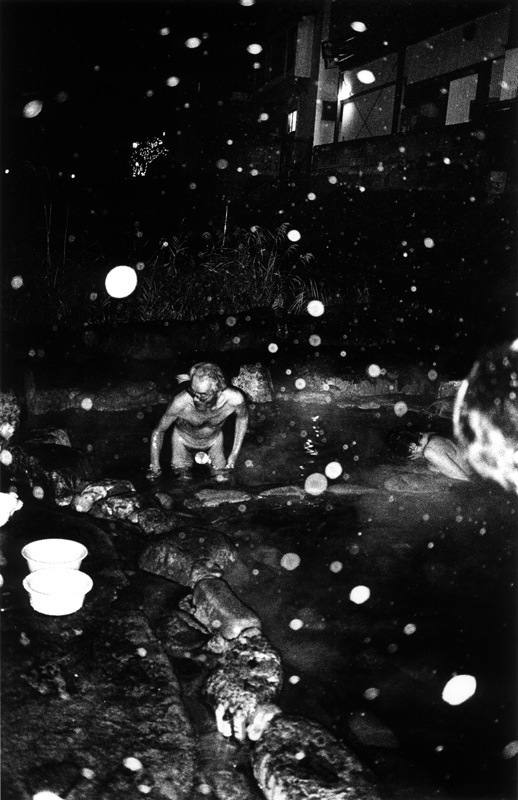
Masahito Agake is one more hunter and watcher who is ready to capture these seams in our reality when they become apparent. While some may dismiss his visions as “nothing new”, once you take your time with the material there is a detectable addition of his own views. Photos from Japan and Taiwan blend into each other, connecting dots of universality that are often glossed over. In his photography he uses digital techniques to add an intriguing textural glow and shimmer to the images, which in my view add an incentive for repeated viewing to the photographs. While this may not be to everyone’s taste, we encourage you to not look just once.
Masahito Agake Gallery -- Image 1
Masahito Agake Gallery -- Image 3
Masahito Agake Gallery -- Image 4
Masahito Agake Gallery -- Image 5
Masahito Agake Gallery -- Image 6
Masahito Agake Gallery -- Image 7
Masahito Agake Gallery -- Image 8
Masahito Agake Gallery -- Image 9
Masahito Agake Gallery -- Image 10
Masahito Agake Gallery -- Image 11
Masahito Agake was born in Tokyo in 1969, and works professionally as an architect. In the early 90s Agake began shooting casually while scuba diving, and after coming across the work of Aleksandr Rodchenko and W. Eugene Smith in 1996, he took up photography more seriously. He had his first exhibition at Tokyo’s Place M gallery in 2003, and since then has exhibited his work in different galleries in Tokyo. Most recently he has been exhibiting his work at Third District Gallery in Tokyo’s Shinjuku Ward.
Fujifilm has announced some changes in their product line affecting the following film products:
Neopan 400 (Presto) 120 size is discontinued with immediate effect (does not affect availability in 135 format)
12 and 24 exposure rolls for 35mm film will be gradually phased out
Acros 100 in 11×14 size (special order) discontinued
Provia 100 F 11×14 (special order) discontinued
Pro 160 NC 120 discontinued
T64 reversal 4×5 sheet film, T64 reversal 4×5 Quickload and T64 reversal 8×10 sheet film discontinued
There will be some gradual changes in the packaged quantities of some films, for example single packs will become 3 packs or 5 packs; in the case of 120 format the 20-packs will be withdrawn and only 5-packs remain. We will reflect these changes in our web shop over time as appropriate and where applicable.
In the meantime, the best way to ensure long-term availability of film is to continue shooting it!
Update 7 Mar 2010:
It appears that retailers in the US have received the following notice:
OK…here’s the official Fuji list:
The following are now gone, with no replacement:
Color 160s and160c in 35, 120, 220, 4×5, 8×10, and 4×5 quickload
Color 800z in 35mm 5pack, 120 and 220
Velvia 50 4×5 quickload
Velvia 100 4×5 quickload
Velvia 100F 4×5 quickload
Astia 100F 4×5 quickload
Provia 100F 4×5 quickload
T64 in all formats
Neopan 400 120
CDUII in all formats
The following have had package changes:
Velvia 50, 100, 100F 4×5 and 8×10 are now in 20 sheet boxes
Velvia 50, 100, 100F are now in 5-packs
Astia 100F 4×5 now in 20 sheet boxes, 120 now in 5-packs.
Provia 100F 4×5 and 8×10 now in 20 sheet boxes; 120 now in 5-packs
RXP 120 now in 5-packs
Arcos 100 120 now in 5-packs, 4×5 now in 20 sheet boxes.
Using C mount lenses on Micro Four-Thirds digital camera bodies has become widespread and an enjoyable exploration of lens history. Adapters like these are widely available but MS Optical’s connector kit is somewhat unique – a smartly designed device, not just a piece of metal.
Not only is it made to usual MADE IN JAPAN precision, also unlike other cheaper adapters available it consists of two finely machined parts: an outer ring with a T-Mount (M42, 0.75) screw mount hole, and a smaller removable step-down ring to C-Mount.
The two-part design of this adapter is helpful in cases where, for some reason, a lens cannot be screwed into the adapter as-is or where the aperture or depth of field scales may end up in the place where you cannot see them. The screws can be loosened and the assembly turned to a position you like.
The new S version is a very slim adapter without a surrounding rim to accommodate lenses with larger diameter. However do take care not to overload this adapter. Click on the image to see side-by-side large. Price for each adapter is ¥10,900 plus shipping.
Please pay particular attention to the instructions and warnings accompanying this device as improper use may damage your lens or camera. As in the case of the Cosmicar above, we are happy to accept your C mount lens and have it fitted to the adapter professionally by Mr Miyazaki. Please contact us for details.
Important note: Note that no matter what adapter you use, the image circle of the large majority of C-mount lenses (including the Cosmicar shown here) isn’t large enough to cover the full micro Four-Thirds frame. Instead, there’ll be more or less vignetting.
Neither Japan Exposures nor MS Optical can give you advice on which lens to use. Please research this carefully on the web and note too that manufacturers often put out very different lenses with the same brand name, focal length and aperture; these may have different image circles.) (Thanks Peter)




 here for the Shop