A first look at the Yashica EZ F521 from Japan Exposures on Vimeo.
It’s small, light, bears a quality name and there is a lot of plastic involved: welcome to the Yashica EZ Digital F521, a camera released in Japan yesterday with a price tag just around US$100 (click here to purchase).
Don’t let the big name “fool you” though, this is an inexpensive digital camera that has more in common with a cellular phone camera (with a different form factor of course) than state-of-the-art digital, just like toy cameras using 120 film don’t do so to achieve high quality medium format. For this reason, the F521 has already been dubbed “Digital Holga” even before its release.
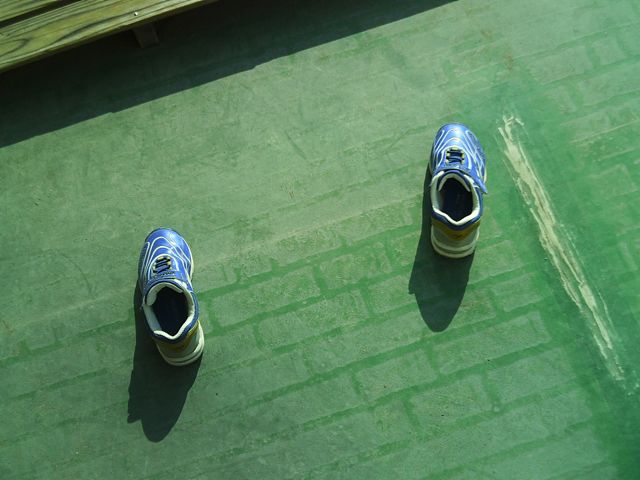




Limitations and shortcomings in your equipment can be good for creativity and there are plenty of those present here. However, given the targeted audience and market segment it would be unfair to point them out as weaknesses on this quirky snapper. Shutter lag, dynamic range, limited configuration options and viewfinder accuracy (mainly parallax) to name just a few aspects. Nonetheless, there is enough potential to charm you anyway, if you like the idea of a toy camera. There does not seem an actual shutter rather than the exposures done by the sensor. Since the lens assembly is fixed onto the body from the front by several screws, there might be some hacking potential by replacing the lens with something else, if you are so inclined.
Please have a look at the brief video review containing further details and sample images with comments. More images can also be found on Flickr and a Flickr group dedicated to the F521 has also been set up.
An alternative, more detailed review can be found here.
The Yashica EZ Digital F521 is available to order in the Japan Exposures Web Shop, shipments are scheduled for next week.
This video is available as a podcast via iTunes.
That might actually be a good donor to hack into a digital module for a Leica M camera. Seems there are not too many buttons involved and there is no shutter connected to the circuitry. Would probably only allow for shutter speed like 1/30th or slower to expose the whole sensor, but that could be manageable! Guess I will get me one and see what I can hack it into
That type of distortion is called the Lartigue effect. It’s named after Jaques-Henri Lartigue who was a photographer that used a vertical shutter moving slit camera. He used this to great effect to take pictures of race cars and things like that and give them a sense of movement.
Keep in mind that when adopting lenses, you will end up with significantly different field of view courtesy of the smaller sensor. While the “equivalent” focal length on this thing is ~43mm the actual focal length is 7mm. So, mounting say my 50mm Summar on this thing, I’d end up with a rather long telephoto lens — and the high pixel density from the small sensor would probably not show the lest in its best light.
Still, could be fun to experiment with! 🙂
RE: “That type of distortion is called the Lartigue effect. It’s named after Jaques-Henri Lartigue who was a photographer that used a vertical shutter moving slit camera. He used this to great effect to take pictures of race cars and things like that and give them a sense of movement.”
The issue is that it’s got a CMOS imager with a ‘rolling shutter’. See for instance:
http://en.wikipedia.org/wiki/Rolling_shutter
spare your money and just use your cell phone. same thing, if not more holgaesque.
My cellphone is old and puts out very few pixels, whereas the cellphones of most of the people I know cost more than this camera does. But, combined with the photo at the top, your comment has got me thinking. Cellphone digicams are all very well, but couldn’t Fuji (or Cosina) bring out a film cellphone?
Boris V, et al, if you’re in Japan and “using” your cellphone, consider contributing to Eyeless in Ginza.
http://fotogrotto.wordpress.com/
Hi there, I have recently purchased this Yashica in lil old New Zealand, and have had my first night experimenting with it. I see in your video review and these other comments that you can acheive this ‘wobbly’ looking effect, and i’m wondering how you acheive it without blurring the entire image?! may be a stupid question but i cant’t seem to get it to work no matter how much im moving the camera and pressing the shutter release!
Thanks, Kate
Thanks for your comment and purchase.
Try it in brought daylight as you want a “fast” shutter speed and the sharp movement. Then it should work. Like everything it takes a little practice to get the timing right, not least because of the shutter lag…
Regards
Dirk
Great, thanks, will test it out in the morning. Am having fun going back to the basics!
Good to hear it – that’s what it’s all about!
hi there thanks for your review. is it really a medium format digital camera?
cheers
carlos
No, of course it isn’t medium format.
Where can I find this is Singapore? 🙂
Right here: http://www.japanexposures.com/shop/product_info.php?currency=USD&products_id=349
🙂
Is this a film camera or it has a memory card where the pics can be uploaded and stored
Hello, yes, this is a digital camera with a memory card.